
Many people live for years with digestive symptoms, fatigue, anemia, brain fog, anxiety, skin issues, or unexplained nutrient deficiencies before discovering the true cause: celiac disease.
Celiac disease is not simply a food sensitivity. It is an autoimmune condition in which the immune system reacts to gluten—a protein found in wheat, barley, and rye—and damages the lining of the small intestine.
When someone with celiac disease eats gluten, the immune system attacks the villi, the tiny finger-like projections inside the small intestine that absorb nutrients. Over time, these villi become inflamed, flattened, and less functional. Without healthy villi, the body may struggle to absorb iron, B12, folate, calcium, vitamin D, protein, and many other nutrients.
This is why celiac disease can affect far more than digestion.
Research suggests celiac disease affects approximately 1% of the population worldwide, with higher rates in people of European ancestry. Many cases remain undiagnosed for years.
Some people develop symptoms in childhood. Others do not become symptomatic until adulthood, sometimes after pregnancy, surgery, infection, severe emotional stress, or another health challenge.
Some people have classic digestive symptoms such as:
chronic diarrhea,
bloating,
abdominal pain,
gas,
weight loss,
pale or foul-smelling stool.
Others may have symptoms outside the gut, including:
fatigue,
iron deficiency anemia,
hair loss,
osteopenia or osteoporosis,
brain fog,
joint pain,
mood changes,
mouth ulcers,
skin rashes,
infertility,
irregular menstruation,
miscarriage,
tingling or numbness,
neuropathy.
This is one reason celiac disease is often missed.
Celiac disease should be properly diagnosed through medical testing.
This often includes:
blood tests such as tissue transglutaminase antibodies (tTG-IgA),
endomysial antibodies,
total IgA testing,
and sometimes endoscopy with biopsy of the small intestine.
Important: If celiac disease is suspected, testing should usually happen before starting a gluten-free diet, because removing gluten too early can affect results.
This is the most important point:
Chinese Medicine does not replace a gluten-free diet in celiac disease.
The essential treatment is a strict lifelong gluten-free diet, including careful attention to cross-contamination.
For many patients, intestinal healing begins within months, though full recovery may take longer—especially in adults or after years of undiagnosed disease.
Without dietary adherence, symptoms may continue silently even if digestion feels “better.”
Once diagnosis is established and a gluten-free diet is in place, many people still struggle with lingering symptoms:
bloating after meals,
loose stools,
fatigue,
anxiety,
poor appetite,
weak digestion,
stress-triggered flares,
sleep issues,
nutrient depletion,
nervous system dysregulation.
This is where acupuncture and Traditional Chinese Medicine may offer meaningful support.
Chinese Medicine does not describe celiac disease as gluten autoimmunity, but it often recognizes similar patterns of dysfunction.
Many patients present with what Chinese medicine would call:
Spleen Qi deficiency – weak digestion, fatigue, loose stool, bloating, poor muscle tone.
Liver-Spleen disharmony – symptoms worsened by stress, abdominal cramping, alternating bowel habits, tension.
Dampness or Damp-Heat – foul-smelling stool, heaviness, inflammation, sluggishness.
Qi and Yin deficiency – long-standing depletion, dryness, weakness, poor recovery, insomnia.
In practical terms, this means treatment is individualized.
One person may need digestive strengthening. Another nervous system calming. Another help rebuilding after years of malabsorption.
Research suggests acupuncture may support digestive health through several mechanisms:
regulating the autonomic nervous system,
reducing stress-related gut symptoms,
modulating inflammation,
supporting motility,
reducing abdominal pain,
improving sleep,
helping fatigue and nervous system resilience.
Although acupuncture does not treat the autoimmune trigger itself, it may help improve quality of life and persistent symptoms in some patients.
Many celiac patients live in a chronically “guarded” state after years of symptoms. Acupuncture may help calm that pattern.
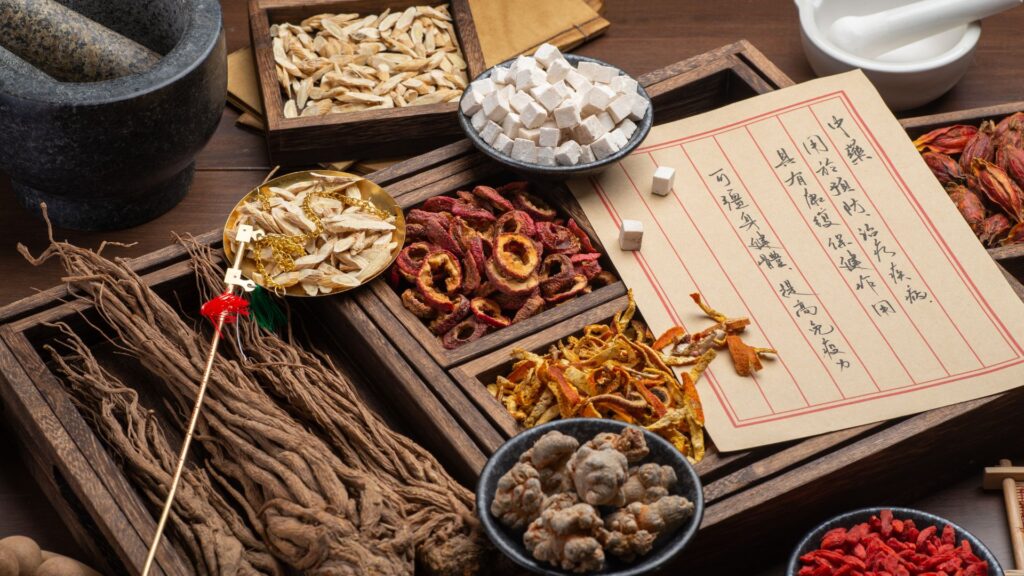
Chinese herbs may sometimes be used to support digestion, reduce loose stool, rebuild energy, or calm inflammation after diagnosis and alongside a strict gluten-free diet.
However, this requires caution.
Herbal formulas must be:
professionally prescribed,
screened for gluten contamination,
appropriate for the individual pattern,
coordinated with medical care if needed.
This is especially important in celiac disease because cross-contamination matters.
Many newly diagnosed patients focus only on removing gluten, but healing often requires more.
Some patients need support with:
iron, B12, folate, zinc, magnesium, vitamin D, calcium,
protein intake,
rebuilding appetite,
gut-friendly meals,
blood sugar stability,
stress digestion connection.
A gluten-free diet full of processed substitute foods is not the same as a healing diet.
Whole foods, adequate protein, cooked vegetables, tolerated grains like rice or quinoa, healthy fats, and nutrient repletion often matter greatly.
I often see patients who have been told “just go gluten-free,” but they still feel unwell.
They may be eating correctly, yet still dealing with years of depletion, stress physiology, poor digestion, anxiety around food, or nutrient deficits.
This is where a more whole-person approach can help.
Modern medicine is essential for diagnosis, monitoring, nutritional labs, bone health, and autoimmune management.
Chinese Medicine may support recovery of the person living with the disease.
If you suspect celiac disease, do not self-diagnose and do not start eliminating gluten before testing unless medically necessary.
Proper diagnosis matters—for long-term health, family screening, and prevention of complications.
Celiac disease is serious, but many people feel dramatically better once it is recognized and managed correctly.
The gluten-free diet is the foundation. Acupuncture and individualized Chinese Medicine may help support digestion, resilience, energy, and quality of life during recovery.
Healing is often not only about removing gluten. It is also about rebuilding the body that has been struggling for years.
Interested in Chinese herbal medicine as part of your recovery? Learn more about how personalized herbal formulas are prescribed and dispensed at Victoria Healing Space.
World Gastroenterology Organisation global guidelines on celiac disease.
American College of Gastroenterology guidelines for diagnosis and management of celiac disease.
NIH / NIDDK Celiac Disease overview.
Peer-reviewed literature on acupuncture for functional GI disorders and autonomic regulation.