
If you live with seasonal allergies, you already know how draining they can be. Allergic rhinitis is not just “a runny nose.” For many people it means poor sleep, constant sneezing, itchy eyes, sinus pressure, brain fog, fatigue, and the feeling that the nose is never really clear.
In Victoria, this is especially common. Tree pollen in spring, grass in summer, weeds later in the season, and mold or indoor allergens year-round can all trigger symptoms. Some people react only during one season. Others feel congested almost all the time.
From a conventional medical perspective, allergic rhinitis is an inflammatory response of the nasal passages to allergens such as pollen, dust mites, mold, or animal dander. Common symptoms include sneezing, itchy nose, watery eyes, clear runny discharge, and nasal congestion. Practice guidelines continue to recommend intranasal corticosteroids and second-generation antihistamines as main first-line treatments, because they are effective for many patients.
At the same time, many people look for more support. Some do not feel fully relieved with medications alone. Others want to reduce how often symptoms flare, or they experience side effects such as dryness, drowsiness, or incomplete relief. This is where acupuncture and Chinese medicine often become part of the conversation.
Acupuncture is not usually presented as a replacement for standard allergy care. It is better understood as a supportive option that may help reduce symptom burden and improve quality of life.
Research in the last several years has shown encouraging results. A 2022 systematic review and meta-analysis found that acupuncture may improve nasal symptoms and quality of life in adults with allergic rhinitis compared with no treatment, and in some outcomes compared with sham acupuncture. A 2024 systematic review on intranasal acupuncture also reported improvements in both nasal and non-nasal symptoms, although, as with much acupuncture research, study quality and methodology vary.
There is also ongoing interest in how acupuncture may work. Current reviews discuss effects on autonomic nervous system regulation, inflammatory signaling, and immune response in allergic rhinitis. In plain language, that means acupuncture may help calm a body that has become overly reactive.
In clinic, patients commonly report that after a series of treatments they breathe more easily through the nose, sneeze less, sleep more deeply, and feel less “inflamed” overall. Not everyone responds the same way, but these are the changes many people hope for.
Traditional Chinese Medicine asks a slightly different question than conventional medicine. Instead of only asking, “What is the allergen?”, it also asks, “Why is this body reacting so strongly?”
Older Chinese medicine texts describe allergic rhinitis as having both an acute trigger and a deeper pattern. During a flare, symptoms are often described as an exterior wind-cold pattern with sneezing, itching, watery discharge, and congestion. But underneath that, many chronic patients are described as having a weakness of defensive Qi, often involving the Lung and Spleen systems, with a tendency toward phlegm or dampness.
Translated into more modern language, this means that allergies are not seen as random. They are viewed as a combination of environmental trigger plus underlying susceptibility. That susceptibility may be related to recovery after illness, poor sleep, chronic digestive weakness, long-term inflammation, or simply a body that has become more reactive over time.
One of the more interesting points in the classical material is the repeated emphasis on digestion. These texts often say that chronic allergy patients tend to have an underlying pattern that includes weak digestion and hidden phlegm, and they recommend attention to diet, especially reducing foods that seem to worsen mucus or congestion. This does not mean every patient must avoid the same foods, but it does support the idea that the nose and digestion are connected.
One of the most practical ideas in both modern integrative practice and classical Chinese medicine is that allergies are often easier to manage before the season peaks than when symptoms are already severe.
Some traditional sources recommend starting supportive treatment six weeks to three months before the expected allergy season. Clinically, this makes sense. If a patient knows that every April or May they become miserable, it is often better to begin treatment early rather than wait for the flare to build.
For some people, this may mean acupuncture before the season starts. For others it may include Chinese herbal medicine, sinus hygiene, reducing indoor allergen exposure, or addressing sleep and stress before the body is already overwhelmed.
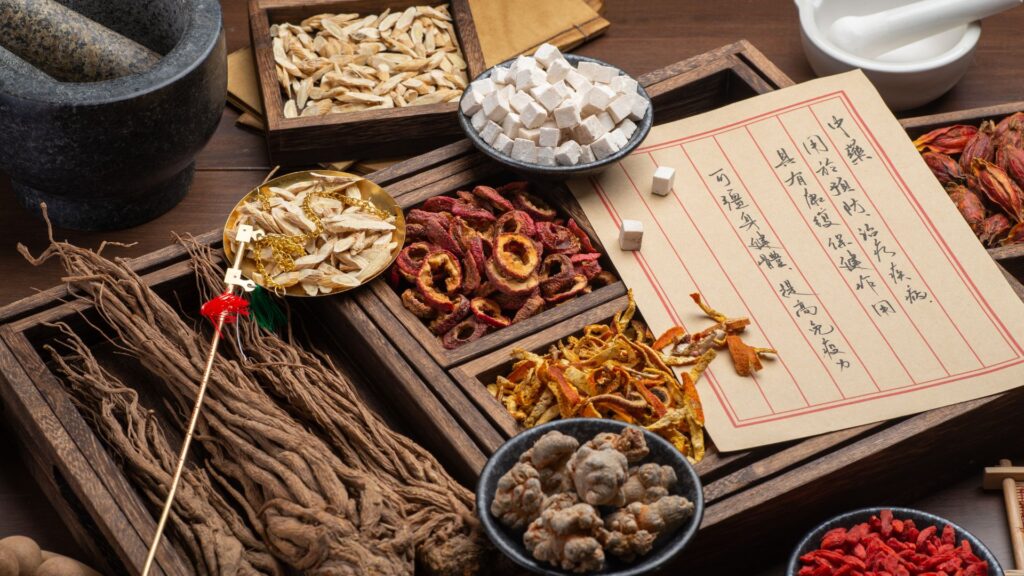
Chinese herbal medicine is also used by some practitioners for allergic rhinitis, but it should always be individualized and prescribed carefully. Classical texts distinguish between formulas used during an acute flare and formulas used between attacks to support the patient’s deeper pattern.
This is an important distinction. In other words, herbs for someone who is actively sneezing and streaming with clear mucus are not necessarily the same herbs you would use for someone who is exhausted, congested every morning, and gets allergies predictably every spring.
If herbs are used, they should also be reviewed in the context of medications, asthma history, pregnancy, blood pressure, and other health conditions.
It is important to keep this grounded. The strongest mainstream medical evidence still supports standard therapies such as intranasal corticosteroids, oral or intranasal antihistamines, and allergen immunotherapy when appropriate. Canadian and international guidance continue to support these as core treatments.
That means acupuncture and Chinese medicine are best described as adjunctive or supportive care, not as a replacement for emergency allergy treatment, asthma care, or specialist evaluation when needed.
The most useful way to think about acupuncture for allergic rhinitis is probably this:
It may not remove pollen from the air, but it may help the body become less reactive, less congested, and more resilient.
For someone who gets partial relief from medications but still feels miserable every spring, that may be very meaningful.
For someone who wants a more whole-body approach that includes sleep, digestion, stress load, inflammation, and prevention, Chinese medicine may offer a framework that feels more complete.
And for someone with severe symptoms, acupuncture can still be integrated responsibly alongside standard allergy treatment.
Not every blocked nose is “just allergies.” If there is fever, thick yellow or green discharge, facial swelling, strong sinus pain, wheezing, shortness of breath, or recurrent infections, medical assessment is important. Those features may point to infection, asthma, or another condition that needs conventional care.
Allergic rhinitis may look simple from the outside, but for many people it is a chronic quality-of-life issue. Good treatment is not only about stopping sneezing in the moment. It is also about helping the body recover better, sleep better, react less intensely, and enter allergy season with more resilience.
That is where acupuncture and Chinese medicine can sometimes offer meaningful support.
Dykewicz, M. S., et al. Rhinitis 2020: A practice parameter update.
Ellis, A. K., et al. Focused allergic rhinitis practice parameter for Canada.
He, M., et al. Acupuncture for allergic rhinitis: a systematic review and meta-analysis.
Chen, X., et al. Intranasal acupuncture therapy for allergic rhinitis: A systematic review and meta-analysis of randomized controlled trials.
Dong, B., et al. Treatment of allergic rhinitis with acupuncture based on current evidence and mechanisms.
Traditional Chinese Medicine clinical text on allergic rhinitis pattern differentiation and preventive treatment.