
Many men over the age of fifty begin to notice subtle changes in urination. At first, it may seem minor. They may wake once or twice during the night to use the bathroom, need to urinate more often during the day, wait longer for the stream to begin, or feel that the bladder has not fully emptied. Because these changes often happen gradually, many men dismiss them as a normal part of aging.
Over time, however, these symptoms can become frustrating and disruptive. Sleep may become poor and broken. Travel can feel stressful when washroom access becomes a constant concern. Some men begin planning their day around where the nearest bathroom will be. Others feel embarrassed and simply avoid talking about it.
One of the most common reasons for these symptoms is Benign Prostatic Hyperplasia, more commonly known as BPH or an enlarged prostate.
The prostate is a small gland located below the bladder. It surrounds the urethra, the tube that carries urine out of the body. As men age, the prostate often increases in size. When this happens, it can place pressure on the urethra and make urination more difficult.
BPH is a non-cancerous condition and is extremely common with age. It is not the same as prostate cancer. However, that does not mean symptoms should be ignored. Urinary changes can also be caused by infection, inflammation, bladder dysfunction, medication side effects, diabetes, neurological issues, or more serious disease. Proper medical evaluation is important.
Men with BPH often describe frequent urination, urgency, waking at night, a weaker stream, dribbling, difficulty starting, stop-and-start flow, or the sensation that urine remains in the bladder after finishing.
Any new or worsening urinary symptoms deserve attention. It is especially important to seek prompt medical care if there is blood in the urine, fever, pain or burning, inability to urinate, recurrent urinary infections, back pain, or sudden severe worsening of symptoms.
Significant urinary obstruction can sometimes place stress on the bladder and, in more serious cases, affect kidney health. This is one reason men should not silently tolerate these symptoms for years.
Western medicine approaches BPH through assessment, diagnosis, and treatment based on severity. A physician may recommend urine testing, symptom scoring, prostate examination, PSA testing when appropriate, ultrasound, or referral to a urologist.
Mild cases may simply be monitored. In many men, lifestyle changes can be surprisingly helpful. Reducing evening fluids, limiting alcohol and caffeine, managing constipation, and reviewing medications may all improve symptoms.
When symptoms become more bothersome, medications are often considered. Some relax muscles around the bladder neck and prostate to improve flow. Others may gradually reduce prostate size in appropriate patients. When symptoms are severe or complications develop, minimally invasive procedures or surgery may be recommended.
One common procedure is TURP (transurethral resection of the prostate), which can be very effective for relieving obstruction. However, like any surgery, it may carry risks such as bleeding, infection, urinary incontinence, or sexual side effects.
Traditional Chinese Medicine looks at urinary problems somewhat differently. Rather than focusing only on the size of the prostate, it looks at the whole pattern of symptoms and how the body is functioning overall.
In Chinese medicine, BPH is rarely seen as one isolated issue. Most cases involve a combination of underlying weakness and obstruction. There may be declining energy with age, poor fluid transformation, stagnation, inflammation, circulation issues, or accumulation that has developed over time.
In classical Chinese medicine language, this may involve combinations of:
Spleen Qi deficiency, Kidney Yin deficiency, Kidney Yang deficiency, Qi stagnation, Blood stasis, phlegm nodulation, and sometimes damp-heat.
This means two men with the same diagnosis of enlarged prostate may require very different treatment strategies.
One man may feel cold, tired, depleted, and wake several times at night with a weak stream.
Another may feel urgent, irritated, inflamed, and have cloudy urine or pelvic discomfort.
Another may notice symptoms worsen dramatically during stress, emotional strain, travel, or after alcohol.
All may technically have BPH, but the underlying presentation is different.
That is one reason individualized treatment is central in Chinese medicine.
Acupuncture does not replace proper medical assessment, but it may offer meaningful support for some men with urinary symptoms related to BPH.
Many symptoms of BPH are influenced not only by gland size, but also by nervous system tone, pelvic tension, sleep quality, inflammation, stress, and circulation.
Acupuncture may help regulate the autonomic nervous system, which can influence urgency, pelvic tightness, nighttime waking, and incomplete emptying. It may also help reduce muscular guarding and tension in the pelvic region, support circulation, and improve sleep.
For many men, poor sleep from nighttime urination becomes one of the most exhausting parts of the condition. When sleep improves, overall quality of life often improves significantly.
The strongest published overview to date is a 2017 systematic review and meta-analysis that examined randomized controlled trials of acupuncture for Benign Prostatic Hyperplasia (BPH). Eight studies involving 661 men were included. The authors found that, in the short term, acupuncture showed statistically significant improvement in urinary symptom scores and urinary flow rate when compared with sham acupuncture.
This is meaningful because it suggests acupuncture may offer genuine symptom relief for some men, particularly early in treatment, while also showing that the research field is still developing.
A 2024 meta-analysis focused specifically on electroacupuncture concluded that electroacupuncture appeared effective for BPH with an acceptable overall safety profile. The review analyzed multiple studies and reported encouraging results, while again emphasizing the need for stronger research methods and better standardization.
Earlier research also supports this direction. A 2011 randomized controlled trial found that men receiving electroacupuncture experienced improvements in voiding volume, average urinary flow rate, and maximal urinary flow rate compared with the sham treatment group.
What this means in real life is that acupuncture may help some men who struggle with frequent urination, weak stream, hesitancy, nighttime urination, urgency, pelvic discomfort, and the overall quality-of-life burden that often comes with enlarged prostate symptoms. For many men, the sleep disruption alone can become exhausting and affect mood, concentration, energy, and daily confidence.
At the same time, acupuncture should not be viewed as a replacement for proper medical care. It does not replace emergency treatment, diagnostic assessment, medication when needed, or surgery when clearly indicated.
Acupuncture may help through several pathways. It may influence the autonomic nervous system, helping reduce stress-related urgency and pelvic tension. It may support pelvic blood flow and reduce congestion. It may relax chronic guarding in the pelvic floor and lower abdomen, which can worsen incomplete emptying or discomfort. It may improve sleep, which is especially important for men waking multiple times each night. It may also support the whole person, especially when BPH exists alongside anxiety, fatigue, constipation, poor digestion, chronic pain, or general aging-related decline.
This is why many men are interested in acupuncture not simply as a “prostate treatment,” but as part of a broader whole-body approach to improving urinary health and quality of life.
Research into acupuncture for BPH is still developing, but interest continues to grow. Reviews have suggested possible improvements in urinary symptoms and quality of life for some men, while emphasizing the need for stronger studies.
Chinese clinical literature has also explored support for urinary incontinence after prostate surgery. One published report from Henan Chinese Medicine described improvement in postsurgical urinary incontinence using a traditional herbal approach based on Bu Zhong Yi Qi Tang modifications.
While such reports should be interpreted cautiously, they reflect growing interest in integrative recovery care.
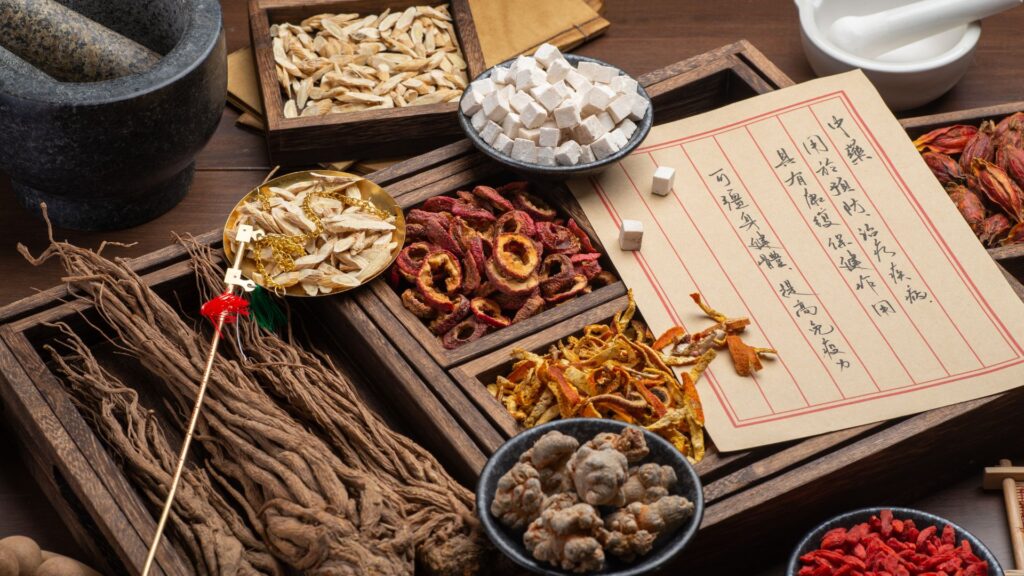
Chinese herbal medicine may also be useful in some cases, especially when symptoms fit a clear pattern. However, herbal treatment should always be individualized and prescribed by a qualified practitioner.
A man with weakness and nighttime urination may need a very different formula than someone with burning urgency and pelvic irritation.
Some classical practitioners emphasize that complex chronic BPH often requires formulas that address several layers at once: deficiency, stagnation, inflammation, and accumulation.
This is why self-prescribing herbs or buying random prostate formulas may not be ideal.
BPH often behaves as a relapsing condition. Many men notice symptoms improve for periods of time and then worsen again during stress, after alcohol, with constipation, poor sleep, illness, travel, or cold weather.
For this reason, long-term management is often more effective than waiting until symptoms become severe.
When damp-heat signs are present, such as burning, urgency, pelvic irritation, cloudy urine, or heat sensations, Chinese medicine traditionally places strong importance on diet. A lighter, cleaner, simpler diet may be helpful, reducing greasy foods, alcohol, excessive sugar, spicy foods, and overeating.
Some traditional sources also suggest that frequent ejaculation may aggravate symptoms in men who are already depleted or experiencing weakness patterns, though this remains a clinical theory rather than a universal rule.
Gentle self-care may help. Some traditional systems describe regular gentle perineal massage as supportive for pelvic circulation, though it should be done cautiously and stopped if uncomfortable.
One point where both systems strongly agree is prevention.
Men over fifty should have regular medical assessment of prostate and urinary health. Even when symptoms appear mild, early attention often creates better outcomes.
BPH is often approached as a prostate problem only. But many men experience it as much more than that. It becomes a sleep problem, a confidence problem, a travel problem, a stress problem, a relationship problem, and an aging problem.
That is why a whole-body approach can be valuable.
Western medicine helps with diagnosis, monitoring, medications, and procedures when necessary. Chinese medicine may help reduce symptom burden, regulate the nervous system, improve sleep, address stress, and support long-term function.
These two approaches do not need to compete. In many cases, they work well together.
An enlarged prostate is common, but suffering in silence should not be considered normal.
If urinary symptoms are affecting sleep, comfort, confidence, or quality of life, it is worth getting assessed and exploring treatment options.
For some men, that may mean medical treatment. For others, it may mean lifestyle changes, acupuncture, herbal medicine, or a combination of all three.
The goal is not simply to shrink a gland. The goal is to help a man sleep better, feel better, function better, and live with more ease.
Mayo Clinic. Benign prostatic hyperplasia: Symptoms and causes.
Mayo Clinic. Benign prostatic hyperplasia: Diagnosis and treatment.
American Urological Association Guidelines for BPH / LUTS.
Urology Care Foundation. Benign Prostatic Hyperplasia overview.
Zhang W. et al. Acupuncture for benign prostatic hyperplasia: systematic review and meta-analysis.
Li Zhi-qiang & Yang Jun. He Nan Zhong Yi (Henan Chinese Medicine), 2000. Postsurgical urinary incontinence after prostatic hypertrophy surgery treated with Bu Zhong Yi Qi Tang modification.
Zhang W, Ma L, Bauer BA, Liu Z, Lu Y. Acupuncture for benign prostatic hyperplasia: A systematic review and meta-analysis. PLOS One. 2017;12(4):e0174586. Included 8 randomized controlled trials (661 participants). Found short-term improvements in urinary symptom scores and urinary flow measures, with less certain medium-term effects.
Chen R, et al. Efficacy and safety of electroacupuncture for benign prostatic hyperplasia: A systematic review and meta-analysis. Medicine (Baltimore). 2024. Reported electroacupuncture showed beneficial effects with an acceptable safety profile, while calling for stronger future trials.
Yu JS, Shen KH, Chen WC, et al. Effects of electroacupuncture on benign prostate hyperplasia patients with lower urinary tract symptoms: a single-blinded, randomized controlled trial. Evidence-Based Complementary and Alternative Medicine. 2011. Reported improvements in voiding volume, average flow rate, and maximal urinary flow rate versus sham treatment.
Zhu L, et al. Study protocol for a randomised controlled trial of electroacupuncture for lower urinary tract symptoms in men with BPH. BMJ Open. 2024. Describes a multicentre sham-controlled trial designed to further clarify efficacy and safety.