
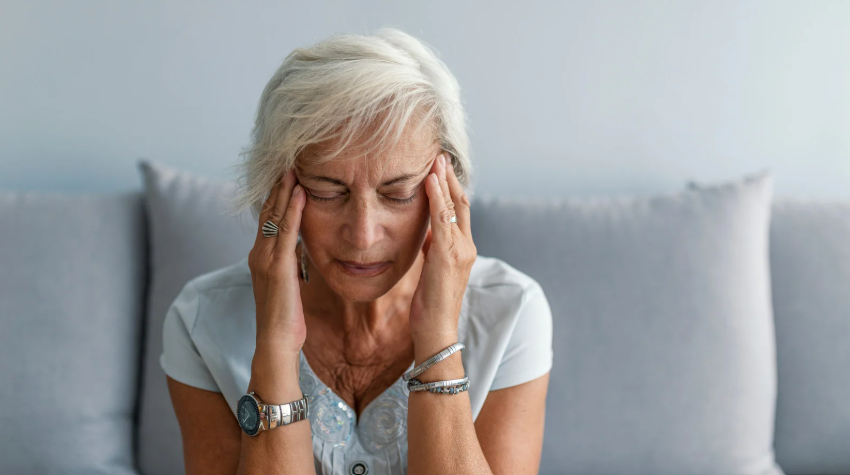
Headaches and migraines are one of the most common reasons people seek care. But not all headaches are the same — and where your pain is located can provide important clues about what is happening in your body.
If you are searching for acupuncture for headaches in Victoria, BC, understanding the pattern behind your pain may help guide more individualized care.
At Victoria Healing Space, headaches are approached through a whole-body perspective, not just symptom relief.
In Traditional Chinese Medicine, the location and type of headache are used to understand different functional patterns in the body.
This system is based on over 2000 years of clinical observation.
Connecting a headache to an “organ” in Chinese Medicine does not mean the organ is diseased.
It means its function or pathway may be out of balance.
This is why two people with the same diagnosis — for example, “migraine” — may receive completely different treatments.
Headaches at the top of the head are often associated with internal tension or stress patterns.
Dull pain → may be linked to low energy or nourishment
Pressure → often associated with stress
Sharp pain → may reflect tension or strain
Throbbing or burning → may relate to stronger stress patterns
This is a common migraine location.
One-sided headaches
Often associated with emotional tension or stress
Heavy or dull pain may be influenced by rich or heavy foods
Heavy, dull pain → often related to digestion
May feel like pressure or heaviness
Can be influenced by sugar, alcohol, or heavy meals
Sharp pain → may be associated with internal heat or constipation
Acute pain → may follow exposure to cold, poor posture, or sleep position
Chronic pain → often linked to long-term tension or low energy
In Chinese Medicine, not only the location — but also the quality of pain is important:
Dull pain → may suggest low energy, fatigue, or depletion
Sharp or throbbing pain → often linked to stress or tension
Cold sensation with nausea → may reflect reduced internal warmth
This is why no two headaches are treated the same way.
Acupuncture can:
reduce frequency and intensity of headaches
influence pain-processing pathways
regulate the nervous system
improve circulation
support relaxation and sleep
A Cochrane review (Linde et al., 2016) found acupuncture may help with migraine prevention, with fewer side effects compared to medication.
A large meta-analysis (Vickers et al., 2018) showed acupuncture provides clinically significant improvement in chronic pain conditions, including headaches.
Recent research (Xu et al., 2024) suggests acupuncture may reduce migraine frequency, with best results seen over a structured course of treatments.
Different countries approach headache treatment differently.
Research (Shaohua, Zhang, Sun et al., 2022) shows:
China: ~23% use of acute migraine medications
United States: ~95.1%
Australia: ~80%
Japan: ~73%
In Chinese hospital settings, Chinese herbal medicine is often used more frequently than acupuncture or pharmaceuticals.
This does not replace Western medicine — but it shows there are multiple ways to support the body.
At Victoria Healing Space in Victoria, BC, treatment is individualized.
We consider:
headache location and type
stress levels
digestion
sleep
overall health
Treatment may include:
acupuncture
moxibustion (gentle heat therapy)
herbal medicine (when appropriate)
lifestyle guidance
The goal is to support both symptom relief and long-term balance.
You may consider acupuncture if you experience:
recurring headaches
migraines affecting daily life
stress-related headaches
neck and tension headaches
headaches not fully relieved by other approaches
This information is educational only.
Seek immediate medical care if you have:
sudden severe headache
persistent vomiting
fever or stiff neck
seizures
changes in vision, speech, or movement
If headaches or migraines are affecting your life, support is available.
Victoria Healing Space
https://victoriahealing.space
250-884-0501
Linde, K., et al. (2016).
Acupuncture for migraine prophylaxis. Cochrane Database
Vickers, A. J., et al. (2018).
Acupuncture for chronic pain. Journal of Pain
Xu, S., et al. (2024).
Dose-response meta-analysis of acupuncture for migraine
Shaohua, Zhang, Sun, et al. (2022).
Use of acute anti-migraine medications


