
Carpal tunnel syndrome (CTS) happens when the median nerve becomes compressed as it passes through a narrow space in the wrist called the carpal tunnel. Tendons that move the fingers also travel through this area, so when swelling, irritation, repetitive strain, or tissue congestion develops, pressure inside the tunnel can rise and begin to affect the nerve.
For many people, CTS develops gradually rather than suddenly. It is commonly linked to repetitive wrist and hand use over time. Typing, dental hygiene work, massage therapy, assembly line work, hairstyling, music performance, gripping tools, prolonged mouse use, or any task requiring repeated hand motion may contribute.
Certain health conditions may also increase risk, including diabetes, thyroid dysfunction, rheumatoid arthritis, pregnancy, fluid retention, and inflammatory disorders.
One of the most common early complaints is nighttime tingling.
Many people say they wake up in the middle of the night with numb or tingling hands and need to shake them out. This often happens because the wrist bends during sleep, which can increase pressure inside the tunnel.
At first, symptoms may come and go. Later, they may become more frequent or constant.
People may notice tingling, numbness, burning, weakness, dropping objects, reduced grip strength, clumsiness, or pain in the wrist and hand. Symptoms most often affect the thumb, index finger, middle finger, and part of the ring finger.
If compression continues for too long, weakness of the thumb muscles may develop.
Modern medicine usually diagnoses CTS through physical examination, history, and sometimes nerve conduction studies or EMG testing. These tests help measure how strongly the nerve is being affected.
Conservative treatment may include wrist splinting, rest from aggravating activity, ergonomic correction, anti-inflammatory strategies, physiotherapy, or corticosteroid injection.
When nerve compression is severe or persistent, carpal tunnel release surgery may be recommended and can be highly effective in the right cases.
Traditional Chinese Medicine has described hand numbness, tingling, wrist pain, and loss of hand function for centuries.
From this perspective, carpal tunnel syndrome may involve several overlapping patterns. There may be poor nourishment of the channels and sinews, stagnation of circulation, repetitive strain injury, tension, wind-damp obstruction, cold affecting the tissues, or depletion after overwork, pregnancy, chronic illness, or long periods of stress.
In practical language, one person may have an inflamed and congested wrist. Another may have cold hands and poor circulation. Another may be depleted, overworked, and slow to heal. Another may carry intense neck, shoulder, and forearm tension that increases compression downstream.
This matters because treatment may be different for each person.
Chinese medicine historically observed that numbness and tingling tend to worsen during the night when Blood returns inward during rest. Modern medicine would also note that wrist position during sleep and nighttime fluid shifts can increase pressure in the tunnel.
Different explanations, same observation: nighttime symptoms are common and clinically meaningful.
Acupuncture may be a valuable conservative treatment option for mild to moderate carpal tunnel syndrome and for many repetitive strain cases.
Research suggests acupuncture may help reduce pain, numbness, symptom severity, and functional limitation in some patients.
Possible mechanisms include reducing local inflammation, improving circulation, calming irritated nerves, relaxing tight forearm muscles, modulating pain signaling, and improving sleep disrupted by symptoms.
Many patients report that the hand feels lighter, warmer, more open, less numb, or easier to use after treatment.
Modern research on acupuncture for carpal tunnel syndrome is encouraging.
A randomized controlled trial published in Brain found that acupuncture improved symptoms in people with CTS and was associated with measurable changes in the brain’s sensory processing and median nerve function. This is important because it suggests acupuncture may influence both local tissues and the nervous system more broadly.
Systematic reviews have concluded that acupuncture may improve pain and function in CTS patients, especially when used over a treatment series rather than as a one-time intervention.
Some studies also suggest electroacupuncture combined with wrist splinting may perform better than splinting alone.
This does not mean acupuncture replaces surgery when there is advanced nerve compression, but it does support acupuncture as a meaningful evidence-informed option.
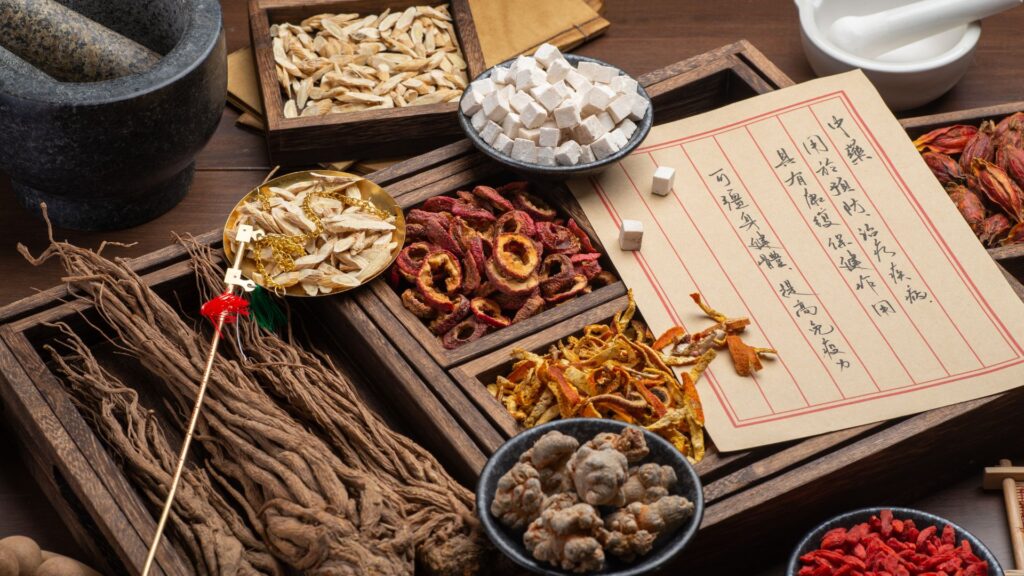
In Chinese medicine, CTS is not always treated only with needles. External therapies are often used to help speed recovery, especially when there is pain, stiffness, swelling, heaviness, or symptoms related to overuse.
These treatments may include herbal liniments, ointments, medicated balms, herbal compresses, warm soaks, or localized heat therapy.
The principle is simple: healing may be supported not only internally, but also by improving circulation and reducing tension directly in the affected tissues.
When the wrist feels tight, sore, swollen, achy, or worse after repetitive use, external herbal treatments may help by increasing local blood flow, softening tissues, easing stiffness, and calming pain.
These approaches are often most helpful when symptoms fit what Chinese medicine describes as Qi stagnation, Blood stasis, or Wind-Damp obstruction. In modern language, this often corresponds to pain that feels stuck, aching, heavy, stiff, weather-sensitive, or aggravated by overuse.
Traditional formulas may contain herbs such as Dang Gui, Hong Hua, Ru Xiang, Mo Yao, Chuan Xiong, Ji Xue Teng, Gui Zhi, Qiang Huo, and Du Huo. These herbs have traditionally been used to improve circulation, reduce pain, warm tissues, relax tendons, and support healing after strain.
Modern pharmacological studies suggest several of these herbs may have anti-inflammatory, analgesic, antioxidant, or microcirculation-supportive properties, although more direct human CTS research is still needed.
Heat therapy may be very helpful for many chronic CTS presentations.
This can include a TDP lamp, infrared warmth, heating pad, warm towel, or warm herbal soak.
Gentle warmth may relax forearm muscles, improve circulation, reduce guarding, decrease stiffness, and ease pain.
Many patients with cold hands, tight forearms, and repetitive strain respond especially well to warmth.
However, if the wrist is acutely inflamed, hot, very swollen, or sharply painful, heat may not be the best first approach.
One of the most important parts of recovery is reducing the activity that continues to irritate the nerve.
If someone receives treatment but continues poor wrist mechanics every day, symptoms often return.
This may mean changing keyboard height, mouse position, grip mechanics, tool design, lifting patterns, sleeping wrist position, or workload during healing.
For many people, referral to occupational therapy, physiotherapy, kinesiology, or ergonomic assessment can be extremely valuable.
Another commonly overlooked factor is stress. Many people unconsciously tighten their shoulders, jaw, forearms, and hands when stressed. This creates additional compression and muscle guarding.
Treating the whole person often improves outcomes.
Prompt medical assessment is important if there is constant numbness, significant weakness, dropping objects frequently, visible thumb muscle wasting, rapid worsening, or loss of hand function.
These may suggest stronger nerve compression and may require urgent intervention.
Carpal tunnel syndrome is common, but it should not be ignored.
Hands are how we work, cook, type, earn a living, care for family, create art, and move through life. Even mild symptoms can greatly affect quality of life.
The best approach is often integrative: accurate diagnosis, activity modification, ergonomic correction, acupuncture, external herbal support, heat when appropriate, rehabilitation, and medical referral when needed.
Early treatment usually responds best.
Maeda Y, et al. Acupuncture for carpal tunnel syndrome: neuroplasticity and symptom improvement. Brain. 2017.
PubMed indexed randomized controlled trials on acupuncture for CTS.
Sim H, et al. Systematic review of acupuncture for carpal tunnel syndrome. Journal of Pain / related indexed reviews.
American Academy of Orthopaedic Surgeons. Clinical Practice Guideline: Carpal Tunnel Syndrome.
NIH MedlinePlus. Carpal Tunnel Syndrome overview.
Pharmacological reviews on Dang Gui, Hong Hua, Boswellia / Ru Xiang analogues, Myrrh / Mo Yao, and circulation-supportive herbal compounds.