
Many people feel worried when an ultrasound report mentions gallbladder sludge. The name sounds serious, but it usually describes a stage where bile inside the gallbladder has become thick, stagnant, and filled with tiny particles such as cholesterol crystals, calcium bilirubinate, and mucus. It is not yet a true gallstone, but it can be part of the process that sometimes leads to stones, inflammation, biliary pain, or pancreatitis.
Some people have no symptoms at all. Others experience nausea, bloating, pain after meals, right upper abdominal discomfort, or attacks similar to gallstones.
The good news is that gallbladder sludge is often reversible, especially when the underlying causes are corrected.
Most cases develop because of two main problems:
First, bile becomes overly concentrated with cholesterol or other solids.
Second, the gallbladder is not emptying efficiently, so bile sits too long and thickens.
This is why sludge is common after rapid weight loss, prolonged fasting, pregnancy, illness, hospitalization, insulin resistance, obesity, or certain medications.
Acupuncture is not a replacement for emergency care, surgery, or treatment of infection. But in the right patient, it may be a meaningful supportive therapy.
Research on acupuncture for gallbladder disorders is still developing, but there are several interesting areas.
Studies have shown that acupuncture may influence the autonomic nervous system, which helps regulate digestive motility and smooth muscle tone. This matters because the gallbladder and sphincter of Oddi rely on coordinated nerve signaling to empty properly.
Some research has explored acupuncture’s effect on cholecystokinin (CCK), a digestive hormone that stimulates gallbladder contraction after meals. When CCK signaling is impaired or meals are skipped, bile stagnation becomes more likely.
Other studies suggest acupuncture may reduce visceral pain, spasm, nausea, and inflammatory signaling.
Traditional and modern literature often identify GB34 (Yanglingquan) as one of the key points for biliary disorders. Experimental work has explored its effects on gallbladder motility and biliary tract regulation.
For some patients, acupuncture may help with:
recurrent mild right-sided discomfort,
post-meal bloating,
stress-triggered digestive symptoms,
nausea,
poor digestive rhythm,
functional gallbladder sluggishness,
recovery after biliary episodes once medically stable.
It may be especially useful when stress, nervous system tension, poor sleep, irregular eating, and digestive dysregulation are part of the picture.
Traditional Chinese Medicine does not describe gallbladder sludge in biochemical language. Instead, it looks at patterns.
Many patients with gallbladder symptoms present with Liver Qi stagnation—stress, frustration, rib-side tightness, bloating, sighing, irritability, digestive upset.
Others show Damp-Heat in the Gallbladder, which may include nausea, bitter taste, greasy food intolerance, darker urine, fullness, irritability, and inflammatory tendencies.
Some have Blood stasis, often seen in chronic recurrent pain.
Others have deficiency patterns after pregnancy, illness, dieting, or exhaustion.
This matters because treatment should match the person, not just the ultrasound report.
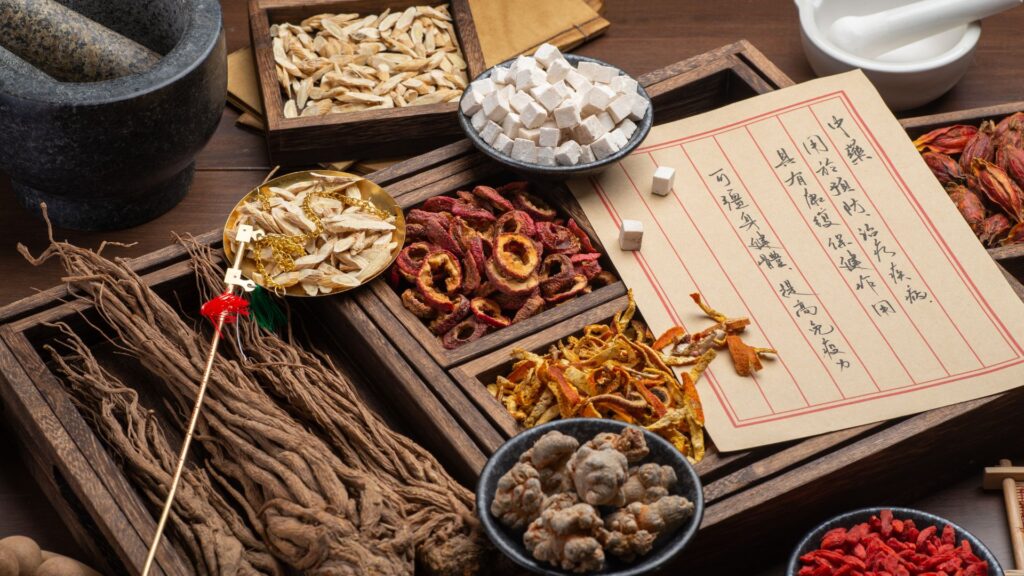
Chinese herbal medicine has traditionally been used to support bile movement, reduce stagnation, calm inflammation, ease pain, and improve digestion.
One herb repeatedly mentioned in traditional formulas for gallbladder disorders is Jin Qian Cao (Lysimachia christinae). It appears in multiple approved Chinese formulas for gallstones and biliary conditions. Research has explored possible actions such as improving bile flow, supporting liver function, reducing cholesterol deposition, and anti-inflammatory effects through pathways such as NF-κB modulation.
Other herbs sometimes used depending on pattern may include:
Yu Jin – used traditionally for constrained Liver/Gallbladder Qi, pain, and stagnation.
Chai Hu – often used when stress and digestive rhythm are involved.
Yin Chen Hao – used in Damp-Heat patterns and jaundice-type presentations.
Zhi Shi / Zhi Ke – used to move Qi and relieve fullness.
Bai Shao – may be chosen when spasm or tension is prominent.
Dan Shen – used when chronic stagnation and circulation issues are present.
These are not casual self-prescription herbs. They should be selected by a qualified practitioner based on pattern, medications, and safety.
Herbal medicine can be powerful and should be used responsibly.
People with gallbladder pain should not self-treat blindly with internet herbs, detox kits, or flushes.
If there is obstruction, fever, jaundice, pancreatitis, or severe pain, herbs are not the priority—urgent medical care is.
Herbs may also interact with blood thinners, diabetes medications, liver disease, pregnancy, and other conditions.
Gallbladder flushes are heavily promoted online, but medical reviews note that the “stones” passed are often soap-like byproducts of oil and digestive reactions rather than true gallstones. Flushes may also provoke pain or obstruction if real stones are present.
For this reason, they are generally not recommended.
The most effective approach is often not Eastern versus Western.
Western medicine is essential for:
ultrasound diagnosis,
bloodwork,
monitoring inflammation,
managing complications,
UDCA medication when appropriate,
surgery when necessary.
Chinese medicine may support:
motility and flow,
pain reduction,
stress regulation,
digestive rhythm,
recovery after illness,
whole-body balance.
Many gallbladder issues worsen with modern habits:
skipping breakfast,
crash dieting,
yo-yo weight loss,
high sugar intake,
long fasting periods,
stress eating,
sedentary life.
Supportive habits include:
regular meals,
gradual weight loss,
moderate healthy fats,
fiber-rich foods,
hydration,
walking after meals,
stress reduction,
better sleep.
When I see gallbladder-related patients, I often find the gallbladder is only part of the story.
The deeper picture may include stress, nervous system overload, hormonal shifts, digestive stagnation, metabolic syndrome, or years of irregular eating.
This is why treating only the sludge may miss the real cause.
Gallbladder sludge is common, sometimes temporary, and often reversible—but it should not be ignored if symptoms are present.
If you have recurrent right upper abdominal pain, nausea after meals, bloating, intolerance to rich foods, or an ultrasound showing sludge, proper medical assessment matters.
Acupuncture and individualized herbal medicine may offer supportive care for the right patient, especially when combined with medical guidance and sustainable lifestyle change.
Interested in Chinese herbal medicine as part of your recovery?
Learn more about how personalized herbal formulas are prescribed and dispensed at Victoria Healing Space.
Clinical review: Gallbladder Sludge natural history, prevalence, complications, and integrative evidence summary.
Lecture summary: Gallbladder sludge risk factors, treatment pathways, TCM patterns.
PubMed indexed literature on biliary motility, UDCA, microlithiasis, pancreatitis risk, and complementary care discussed in uploaded review.