
Many people are surprised when they first hear they have high blood pressure.
Not because they felt perfectly healthy — but because deep inside they already knew something in the body had not felt right for a long time.
They were tired all the time but could not relax. Their shoulders constantly felt tight. Sleep stopped feeling restorative. The mind would not turn off. The body felt overstimulated, reactive, tense.
Some people begin waking at 3 AM every night. Others develop headaches, dizziness, anxiety, digestive issues, chest tightness, or a strange feeling of internal pressure they cannot fully explain.
Then one day the blood pressure numbers start rising.
In modern medicine, hypertension is viewed primarily through the cardiovascular system. And rightly so — high blood pressure is serious and increases the risk of stroke, heart disease, kidney disease, and vascular complications.
But many patients feel there is more happening than simply “pressure in the arteries.”
This is where Traditional Chinese Medicine often resonates deeply with people.
At Victoria Healing Space in Victoria, BC, many patients seeking acupuncture and Chinese herbal medicine support for hypertension are often not only dealing with elevated blood pressure. They are also dealing with exhaustion, chronic stress, poor sleep, nervous system overload, and years of imbalance between activity and recovery.
The nervous system was designed for short periods of stress.
When danger appears, the body activates the “fight-or-flight” response. Heart rate increases. Blood vessels tighten. Stress hormones rise. Muscles tense. Digestion slows down. Sleep becomes lighter and more alert.
This response is protective in emergencies.
The problem is that many modern people never fully leave this state.
Over time, chronic stress may contribute to vascular tension, inflammation, poor sleep, fatigue, headaches, anxiety, digestive dysfunction, hormonal imbalance, and elevated blood pressure.
According to the World Health Organization, hypertension remains one of the leading contributors to heart disease, stroke, kidney disease, and premature death worldwide.
Chinese medicine does not look only at the blood pressure reading. It looks at the entire person.
How are you sleeping? How is your digestion? Do you feel constantly rushed or emotionally overloaded? Does your body ever fully rest? Do you feel overheated, inflamed, depleted, or exhausted?
In Chinese medicine, hypertension is not viewed as one identical condition in every person.
Some patients appear tense, flushed, irritable, overstimulated, and unable to switch off. Others feel foggy, swollen, heavy, exhausted, and mentally cloudy. Some become depleted after years of stress, caregiving, menopause, burnout, poor sleep, or emotional overload.
Two people may have the same blood pressure reading while their bodies are telling completely different stories.
One of the most common hypertension-related patterns in Chinese medicine is called Liver Yang Rising.
These patients often live in a constant stress response. They may experience headaches, dizziness, tinnitus, jaw clenching, neck tension, flushing, irritability, emotional reactivity, and insomnia.
Modern medicine might describe many of these people as living in chronic sympathetic nervous system activation.
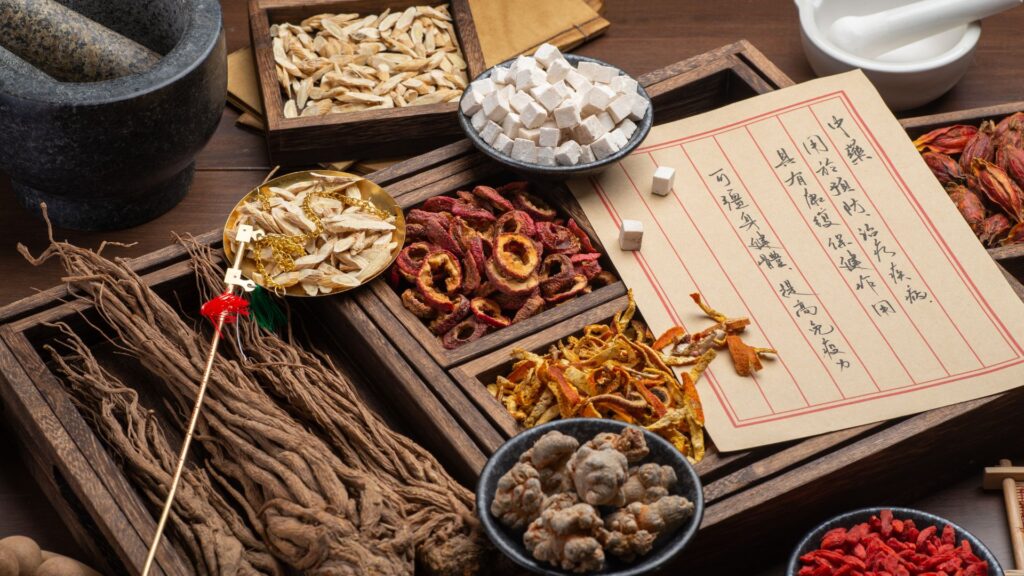
Traditional herbal formulas associated with this pattern often include Tian Ma Gou Teng Yin. Important herbs commonly discussed in these presentations include Tian Ma (Gastrodia), Gou Teng (Uncaria), Xia Ku Cao (Prunella), and Niu Xi (Achyranthes). These herbs are traditionally used to calm rising tension patterns, reduce internal agitation, and support circulation.
Another very common modern presentation is what Chinese medicine calls Phlegm-Damp Accumulation.
These patients often describe heaviness in the body, fatigue, sluggish digestion, brain fog, swelling, inflammation, weight gain, or a feeling of metabolic stagnation.
Interestingly, modern medicine increasingly connects hypertension with obesity, inflammation, insulin resistance, poor sleep, and metabolic dysfunction.
Chinese medicine observed similar relationships centuries ago — although it used different language.
Traditional formulas often discussed for this pattern include Ban Xia Bai Zhu Tian Ma Tang. Important herbs commonly used include Ban Xia (Pinellia), Fu Ling (Poria), Bai Zhu (Atractylodes), and Chen Pi (Aged Tangerine Peel).
Some patients with hypertension appear more depleted than excess.
These people are often tired but cannot rest deeply. They may experience anxiety, palpitations, insomnia, night sweats, hot flashes, dizziness, dry mouth, emotional sensitivity, or exhaustion combined with internal restlessness.
Many women notice blood pressure changes during perimenopause and menopause, especially after years of poor sleep and chronic stress.
Chinese medicine often describes these presentations as deeper depletion patterns involving exhaustion of the body’s restorative reserves.
Traditional formulas associated with these patterns include Qi Ju Di Huang Wan and Zhi Bai Di Huang Wan. Important herbs frequently discussed include Shu Di Huang (Rehmannia), Gou Qi Zi (Goji Berry), Mai Men Dong (Ophiopogon), and Bai Shao (White Peony Root).
Many patients expect acupuncture to feel purely physical.
But one of the most common things people say after treatment is:
“I finally felt my body slow down.”
Acupuncture is traditionally used to help regulate the nervous system, improve circulation, release muscular tension, calm stress responses, and support the body’s shift out of chronic overactivation.
Research suggests acupuncture may influence autonomic nervous system regulation, circulation, stress response, and sleep quality. PubMed — Acupuncture and Hypertension Research
For some patients, the emotional response after treatment can feel surprisingly profound because they realize how long they have been living in survival mode.
In Traditional Chinese Medicine, acupuncture and herbal medicine were rarely viewed as completely separate therapies.
Acupuncture often works more dynamically and immediately. It may help calm tension, regulate circulation, relax the nervous system, and help the body reset.
Chinese herbal medicine works differently.
Herbal formulas are traditionally selected according to the deeper pattern underneath the symptoms. One person may need support for stress and insomnia. Another may need support for digestion and inflammation. Another may show signs of exhaustion, hormonal depletion, or chronic recovery failure after years of stress.
This is why acupuncture and herbal medicine are often combined in longer-standing conditions.
Acupuncture may help calm the “surface storm,” while herbs may help support the deeper terrain underneath between treatments.
At the same time, herbal medicine is not something that should be self-prescribed casually from the internet. Herbs may interact with blood pressure medications and must be selected carefully, especially in patients with cardiovascular conditions.
One of the most important things to understand about hypertension is that there is rarely one single cause.
For many people, high blood pressure develops gradually through years of chronic stress, poor sleep, nervous system overload, inflammation, inactivity, hormonal transition, emotional strain, digestive dysfunction, and metabolic imbalance.
This is also why treatment is rarely instant.
Patients often search for one supplement, one herb, or one treatment that will “fix” the problem quickly. But the body usually changes slowly in both directions — toward imbalance and back toward regulation.
Perhaps one of the most important questions Chinese medicine asks is:
“Why is the body under pressure in the first place?”
Sometimes the body is not only hypertensive.
Sometimes it is exhausted.
Overstimulated.
Inflamed.
Sleep-deprived.
Emotionally overloaded.
Disconnected from recovery.
Chinese medicine attempts to reconnect these patterns instead of separating them into isolated symptoms.
Many patients discover that when sleep improves, stress decreases, digestion stabilizes, inflammation reduces, and the nervous system begins calming down — the body often starts responding very differently overall.
Interested in Chinese herbal medicine as part of your recovery?
Learn more about how personalized herbal formulas are prescribed and dispensed at Victoria Healing Space.
This article is for educational and informational purposes only and is not intended to diagnose, treat, cure, or replace medical advice or medical care. Hypertension is a serious medical condition and should always be monitored by a qualified physician. Patients should never stop, reduce, or adjust prescribed blood pressure medications without medical supervision.
The Chinese herbal formulas, herbs, and Traditional Chinese Medicine patterns discussed in this article are provided for educational purposes only and are not prescriptions or treatment recommendations. Self-prescribing herbs based on online information is not recommended, especially for patients taking blood pressure medications or living with cardiovascular disease, as herbs may interact with medications or may not be appropriate for a specific individual pattern.
Acupuncture and Chinese herbal medicine may support stress regulation, sleep, circulation, digestion, nervous system balance, and overall wellbeing as part of an integrative approach to care. All herbal medicine should be prescribed individually by a qualified practitioner after proper assessment.