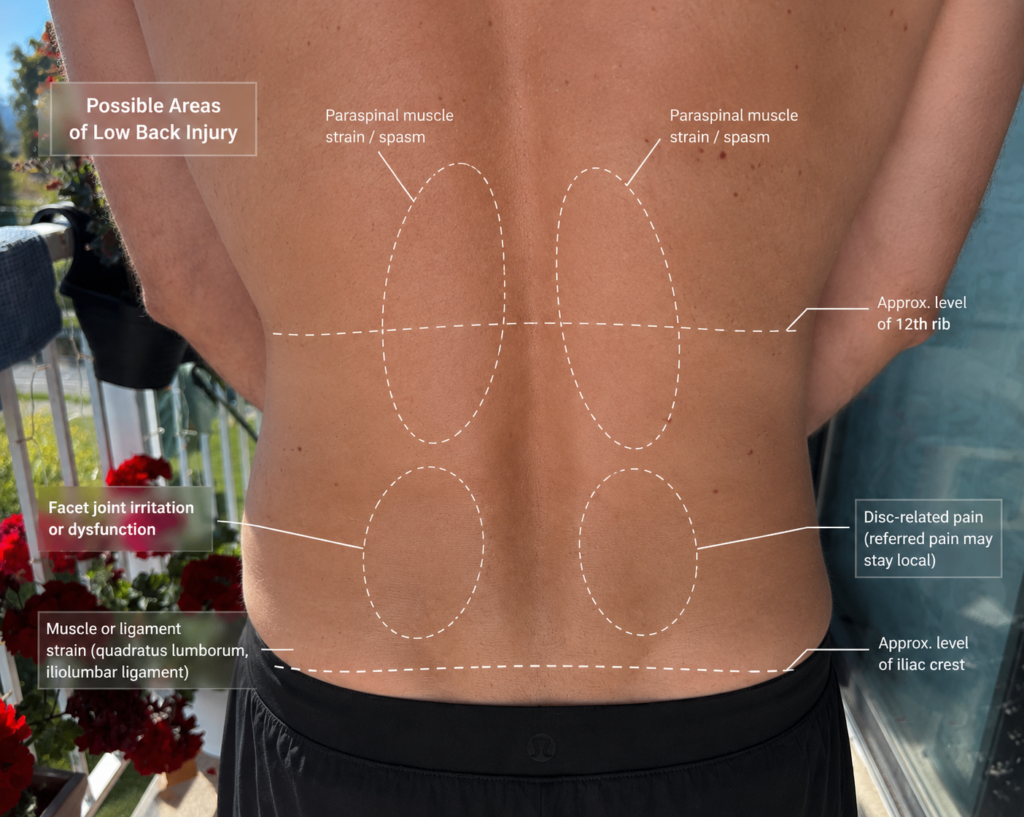
If you have been dealing with a sports injury, chronic muscle pain, tendonitis, back pain, neck pain, or a stubborn musculoskeletal condition that has not fully resolved, you have likely come across several needle-based treatment options: dry needling, IMS, and acupuncture.
They all use thin sterile needles. They can all be used for pain management. And they are genuinely easy to confuse.
As a Registered Acupuncturist and Traditional Chinese Medicine Practitioner in Victoria, BC, I hear the same question regularly:
“I had dry needling at my physiotherapist’s office. Is that the same as acupuncture?”
The short answer is both yes and no.
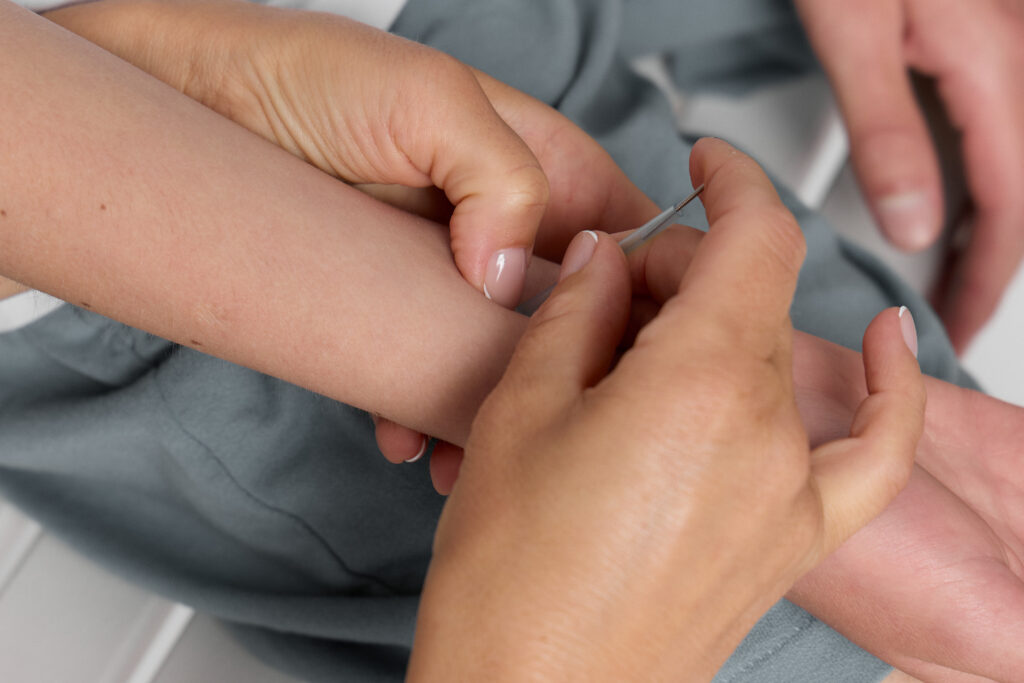
Yes, because all three approaches use the same type of sterile filiform needle.
No, because the assessment, treatment goals, and clinical reasoning behind those needles can be very different.
Understanding those differences matters. Not because one approach is necessarily better than another, but because the right treatment depends on what is driving your pain, how long it has been there, and what your body needs to recover.
Dry needling is a Western medicine technique used primarily by physiotherapists and chiropractors. A practitioner inserts a thin, sterile needle directly into a trigger point or a tight, contracted knot in the muscle tissue with the goal of producing a twitch response. When the muscle involuntarily contracts and releases, tension decreases and pain often follows.
The approach is mechanically grounded. It looks at a muscle, identifies a painful area, and works with it locally. The needles used are identical to acupuncture needles thin, sterile, single use filiform needles. No substance is injected, which is where the term dry comes from.
IMS, or intramuscular stimulation, is a specific form of dry needling developed by Vancouver-based physician Dr. Chan Gunn in the 1970s. Training and certification is offered through the Institute for the Study and Treatment of Pain at the UBC Gunn IMS Centre in the Division of Sports Medicine at the University of British Columbia. IMS specifically targets neuropathic pain, the kind that develops when nerves begin misfiring after irritation, sending amplified pain signals from areas that should not hurt. During IMS, needles are inserted into motor points to stimulate a motor reflex. The muscle twitches and then settles to a lower resting tension. The needles are not left in they are inserted, produce the twitch response, and are removed.
IMS tends to be more intense than acupuncture. Patients often feel soreness for a day or two afterward, similar to post-workout muscle fatigue. This is part of the process.
Both dry needling and IMS are legitimate tools within physiotherapy practice.
The question is not which approach is better. The question is which approach is most appropriate for your individual situation, goals, and health concerns. In some cases, a local muscle-focused approach may be helpful. In others, a broader assessment may provide additional insights into why symptoms developed in the first place.
Understanding the differences allows patients to make informed decisions about their care and choose the approach that feels right for them.
Acupuncture a regulated healthcare profession in Victoria, British Columbia that uses sterile, single-use needles, similar to dry needling and IMS. The key difference lies in how patients are assessed and how treatment decisions are made. While dry needling and IMS typically focus on targeting specific muscles or trigger points, a registered acupuncturist conducts a broader assessment that may include sleep, digestion, energy levels, stress, pulse, tongue, and other factors.
In Traditional Chinese Medicine, treatment is based on identifying patterns of imbalance rather than addressing isolated symptoms. A pattern is a collection of signs and symptoms that helps explain why a problem developed and why it may continue to persist. As a result, two people with the same diagnosis may receive different treatments.
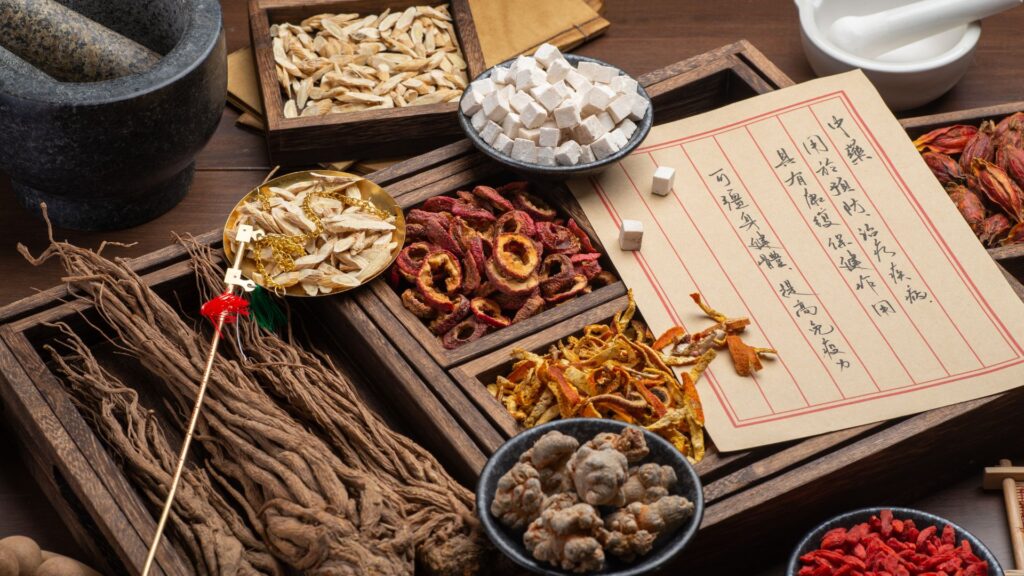
In addition to acupuncture, practitioners may incorporate therapies such as cupping, gua sha, dietary recommendations, lifestyle guidance, or Chinese herbal medicine when appropriate. This pattern-based approach is one of the key distinctions between acupuncture, dry needling, and IMS.
This is where acupuncture differs most fundamentally from dry needling and IMS even though all three approaches may use similar sterile needles.
When a physiotherapist needles a trigger point, the primary focus is often the muscle itself. In Traditional Chinese Medicine, the painful area is important, but treatment is not determined by pain location alone.
Over centuries of clinical observation, practitioners of Traditional Chinese Medicine noticed that when they looked beyond the area of pain and considered the whole person, recurring patterns began to emerge. Two patients could both have neck pain, yet one might experience bloating, fatigue, low energy, poor appetite, and feel better with warmth and pressure, while another might struggle with stress, poor sleep, jaw clenching, irritability, and muscle tension.
Although the diagnosis may be the same neck pain the overall presentation and the factors contributing to the problem may be very different. As a result, the treatment may also be different.
These observations became the foundation of what Traditional Chinese Medicine calls pattern differentiation or the process of identifying relationships between symptoms and understanding how they fit together.
This is why an acupuncturist may ask questions about sleep, digestion, energy levels, stress, body temperature, and other signs that may appear unrelated to the area of pain. Pulse and tongue assessment are also commonly used to gather additional information that helps guide treatment decisions.
For example, in the first patient, treatment may focus on supporting digestion, energy, and recovery in addition to addressing the painful area. In the second patient, treatment may place greater emphasis on calming the nervous system, reducing tension, and improving sleep.
For this reason, acupuncture treatment often includes both local points near the area of discomfort and distal points selected according to the patient’s overall presentation. Because people rarely fit neatly into a single pattern and multiple factors often contribute to the same condition, learning to identify these patterns accurately requires years of study and clinical experience.
There is no single answer.
Dry needling or IMS with a physiotherapist may be a reasonable choice if you have an acute muscle injury with a clear trigger point, you are already working with a physiotherapist on rehabilitation and want to add a needling component, your issue appears primarily local and mechanical, or your extended health benefits cover physiotherapy but not acupuncture.
Acupuncture with a registered acupuncturist may be worth considering if your injury has not fully resolved despite treatment, your recovery feels slower than expected, pain is accompanied by fatigue, poor sleep, digestive concerns, or ongoing stress.
Many people also seek acupuncture for chronic pain, sports injuries, neck pain, back pain, TMJ dysfunction, and tendon injuries when they are looking for a broader assessment and treatment approach. that considers factors beyond the injured tissue itself based on TCM princioles.
Many people find that both approaches have a role. Physiotherapy and acupuncture are not competitors. They often address different aspects of the same problem. A number of my patients at Victoria Healing Space also work with physiotherapists, and the treatments often complement each other well.
As for me personally, I think we are all trying to do the same thing to help people suffer less, recover better, and get back to doing what matters to them.
I am genuinely glad that physiotherapists and other healthcare professionals have embraced needling techniques such as IMS and dry needling. Needles are an ancient therapeutic tool, and it is encouraging to see them used in different healthcare settings to support patients.
The needle itself is shared. The assessment, clinical reasoning, and treatment approach are not.
Different professions use similar tools through different clinical frameworks. Physiotherapy has its strengths. Traditional Chinese Medicine has its strengths. Many people benefit from both.
My goal is not to convince anyone that one approach is better than another. My goal is to help patients understand the differences between dry needling vs acupuncture so they can choose the care that feels right for them.
| Dry Needling | IMS | Acupuncture (R.Ac. / R.TCM.P. / DTCM) | |
|---|---|---|---|
| Who Can Practice | Physiotherapists, chiropractors, and acupuncturists with additional dry needling training | Physiotherapists and acupuncturists with additional IMS certification | Registered Acupuncturists (R.Ac.), TCM Practitioners (R.TCM.P.), and Doctors of TCM (DTCM) licensed by CCHPBC. When additionally trained, may also incorporate dry needling or IMS. |
| Core Theory | Trigger points, muscle tension, and myofascial pain | Nerve irritation, neuropathic pain, and motor point dysfunction | 2500 years of pattern-based medicine. Whole-person assessment and individualized treatment planning. |
| Common Conditions | Acute muscle strains, trigger points, sports injuries, localized muscle pain, reduced range of motion | Chronic muscle tightness, radiating pain, sciatica, nerve-related pain, post-injury sensitization | Neck/back pain, sciatica, TMJ, headaches, chronic pain, stress, sleep, digestion, women’s health, post-stroke rehabilitation |
| Consider When | Pain is localized to a muscle or trigger point and follows a clear injury pattern | Pain radiates, feels electric or burning, or lingers long after injury has healed | Pain is chronic or recurring, recovery is slow, or symptoms include fatigue, poor sleep, stress, digestive concerns, or multiple overlapping symptoms |
| Needle Technique | Inserted into trigger points or tight muscle bands; local twitch response may be sought | Inserted into motor points and areas of nerve irritation; twitch response often expected | Local and distal points selected per patient presentation. May also include electroacupuncture, cupping, gua sha, and Chinese herbal medicine. |