
I know what it feels like when your nervous system stays locked in survival mode long after the danger has passed.
After living through the shelling of Odesa, Ukraine, I watched my own cholesterol climb to 8 — not from diet, not from lifestyle, but from the sustained chemical toll of chronic stress. It dropped back to 4 once my nervous system finally felt safe again in Canada.
That experience is why I understand anxiety not only as a mindset problem, but as a physical one. It lives in your body — in tight shoulders, shallow breathing, restless sleep, and a digestive system that feels constantly knotted. Acupuncture can address it there, at the source.
— Olya Dzidzverg, R.Ac, R.TCMP
Your nervous system does not know the difference between a real threat and a perceived one. Whether it is a deadline, a difficult relationship, or unprocessed grief — the body responds the same way: muscles tighten, breathing shallows, digestion slows, and sleep becomes elusive.
Research confirms what Traditional Chinese Medicine has observed for centuries: stress is stored in the tissues long before we consciously notice it. Over time, the body exhausts its ability to compensate. This is the moment most people walk through my door.
Acupuncture can work as a physical intervention for a physical problem. It sends a direct signal to the brain and nervous system that it is safe to shift out of fight-or-flight and into genuine rest.
Read more about how chronic stress can affect the cardiovascular system in When Stress Becomes Blood Pressure →

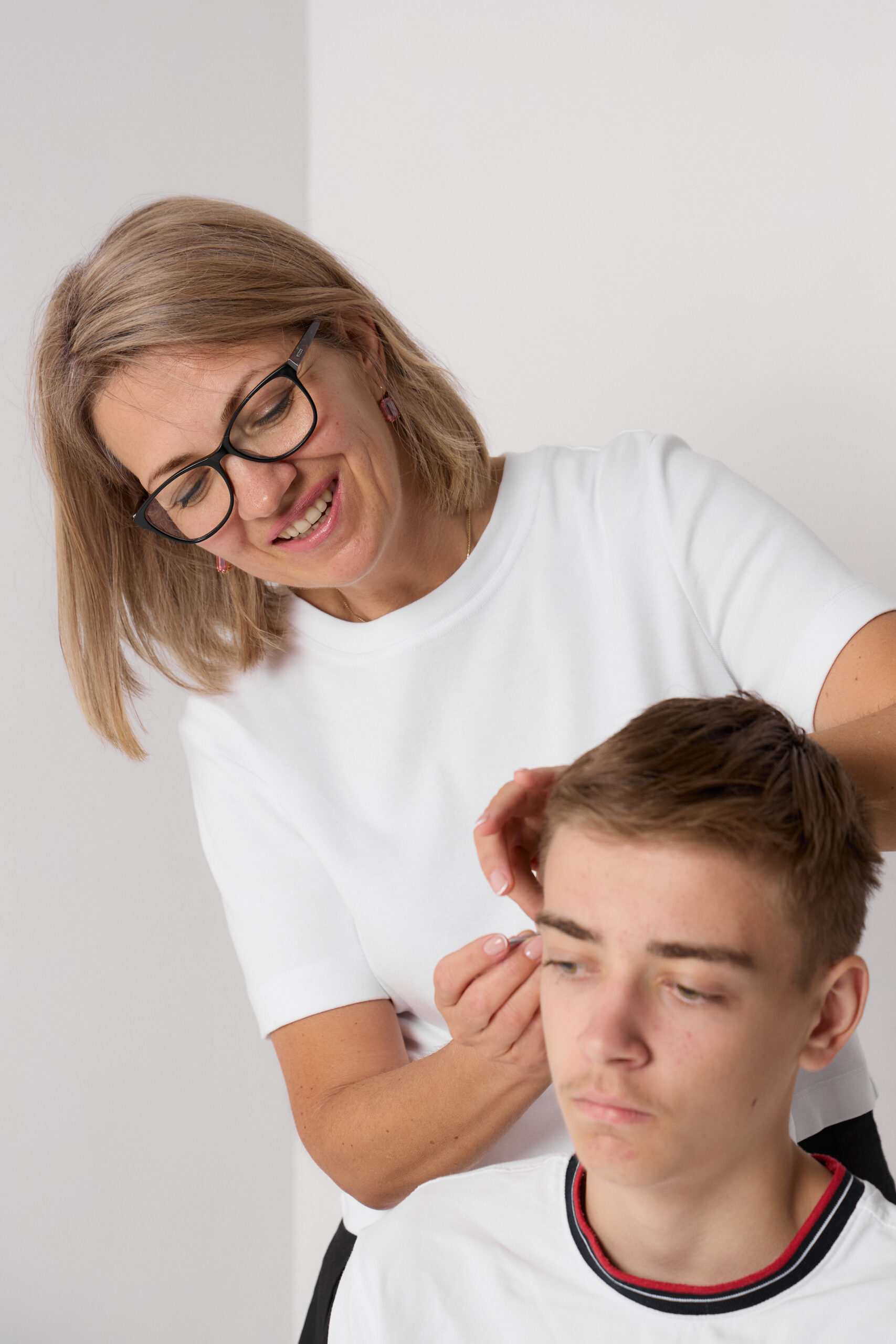 From a neuroscience perspective: Acupuncture for stress and anxiety stimulates specific nerve pathways, prompting a reset of the autonomic nervous system. It triggers the release of endorphins — your body’s natural stress relievers — and supports healthy cortisol regulation.
From a Traditional Chinese Medicine perspective: Chronic stress causes Qi (vital energy) to stagnate, particularly along the Liver meridian. Acupuncture for stress and anxiety can restore smooth flow, releasing held tension and the emotional charge stored in the body.
Both perspectives point to the same outcome: a nervous system that can finally exhale.
In some cases, Chinese herbal medicine may be used alongside acupuncture for stress and anxiety to provide deeper systemic support — particularly for patients with long-standing anxiety, poor sleep, or exhaustion.
| Type of Stress | What Your Body Experiences | How Acupuncture Can Help |
|---|---|---|
| Anxiety from Depletion | Exhaustion, poor sleep, low resilience, feeling empty | Restores and nourishes — rebuilds energy and anchors the nervous system |
| Anxiety from Excess | Held anger, frustration, restlessness, racing mind | Releases and clears — moves stagnant energy and dissipates emotional heat |
Acupuncture for stress and anxiety in Victoria, BC may be a good fit if you:
You are probably not looking to replace anything.
You have a therapist, or you have tried one. You may be on medication that helps — or helps partially. You exercise when you can. You know what you should be doing, and you do most of it. And yet something in your body is still not settling.
This is the most common thing I hear from people who come in for stress and anxiety. Not that nothing has worked — but that something is still missing. The mind is clearer than it used to be. The body has not gotten the message.
Acupuncture for stress and anxiety Victoria BC works at the level the body understands — through the nervous system, through circulation, through the specific physical patterns that anxiety leaves behind in tissue and muscle and sleep. Acupuncture for stress and anxiety does not ask you to think your way through anything. It gives your body a different kind of input.
I work alongside whatever else you are doing. If you are on medication, I work with that. If you are in therapy, acupuncture addresses the layer your therapist cannot reach — the jaw that will not unclench, the chest that tightens by 9 am, the body that stays braced even when the mind knows it is safe. Chinese herbal medicine may also be used when I observe that the nervous system needs rebuilding rather than simply calming. Individual results vary.
The first thing most people notice is sleep.
Not a dramatic shift — just something quieter. Falling asleep without the usual negotiation with your own mind. Waking at 3 a.m. and, instead of the familiar spiral, drifting back. Small. But if you have not slept properly in months, it does not feel small.
After that, the physical things. A jaw that has been clenched so long you stopped noticing it starts to soften. Shoulders that lived somewhere near your ears begin to drop. Breathing that had been shallow for years deepens without any instruction from you. Patients mention this with something like surprise — they had forgotten what it felt like not to be bracing.
Then something harder to name. A quieting of the background noise. That low-level hum of alertness that anxious people often carry — the sense that something is about to go wrong — begins to recede. Not all at once. Week by week.
Here is something I always tell patients before we start: some people feel worse before they feel better. When circulation begins moving through tissue that has been held tightly for a long time, when the nervous system starts to release what it has been suppressing — there can be a temporary flare. This is not a sign that something went wrong. It is the body beginning to process what it could not process before. Knowing this in advance makes it easier to trust the process rather than retreat from it.
Acupuncture for stress and anxiety works differently depending on what is driving your symptoms. How quickly things shift depends on what is driving your anxiety. If it comes from depletion — exhaustion, low resilience, that emptied-out feeling — change is slower and builds with each session. If it comes from excess — irritability, heat, a racing mind that will not stop — the shift is often more immediate. One of the first things I do is identify which pattern is present. Individual results vary.
Most people arrive a little uncertain before acupuncture for stress and anxiety starts. That is normal. Especially if you are anxious — starting something new, in a body that already feels like it is too much, in a room with a stranger who is going to put needles in you.
Here is what actually happens.
You sit down. We talk — not small talk, but the kind of conversation where I am genuinely trying to understand your specific pattern. Your sleep. Your digestion. Where you hold tension and when. What your energy does across the day. How long this has been going on. In Chinese medicine these are not background questions — they are the diagnosis. I also check your pulse and look at your tongue, so please avoid coffee and strongly coloured food or drinks beforehand.
Then you lie down on a heated table in a quiet room. The needles are placed — most people feel a brief tap, then a heaviness or warmth that most describe as the deepest relaxation they have had in a long time. Then you rest. Twenty to thirty-five minutes of genuine stillness. Most people fall asleep.
This part matters more than it sounds. A nervous system that has been running on high alert for months or years does not know how to stop. That quiet time on the table — supported, warm, with nothing required of you — is often the first real signal your body has received in a long time that it is safe to let go.
Before you leave, I tell you what I observed and what I think treatment realistically looks like for you. Not a package. Not a script. Just an honest conversation about what I found and where we go from here.
For parking, what to wear, and everything practical — Your First Visit →
Anxiety and physical symptoms are more connected than most people expect. Jaw tension and TMJ, chronic pain that keeps returning, and in men — erectile dysfunction driven by nervous system dysregulation — these are often the same pattern expressing itself in different places. They are frequently addressed together in the same treatment.
Many people choose acupuncture for stress and anxiety because it is:
Rather than suppressing symptoms, this approach supports the body’s ability to regulate itself.