
Acupuncture for constipation in Victoria, BC is one of the digestive health services offered at Victoria Healing Space. If you struggle with chronic constipation, bloating, hard stools, or difficulty emptying your bowels, acupuncture and Traditional Chinese Medicine may provide additional support.
We talk about healthy eating, exercise, sleep, and stress. But how often do we talk about healthy elimination?
A comfortable, complete bowel movement can bring an extraordinary feeling of physical relief. Less pressure, less bloating, and that wonderful sensation of feeling light and comfortable in your own body.
Yet many people live with constipation for years, accepting irregular bowel movements or constant abdominal discomfort as normal, particularly as they get older.
Healthy digestion doesn’t end with eating. Elimination is part of the process.
Constipation is not simply about how often you have a bowel movement. It is also about how easily and comfortably your body eliminates waste.
According to the National Institutes of Health (NIH), common signs of constipation include:
Fewer than three bowel movements per week
Hard, dry, or lumpy stools
Difficulty or pain when passing stool
A feeling that your bowels have not emptied completely
Some people experience bloating, abdominal discomfort, or excessive straining.
Normal bowel habits vary from person to person. Going two days without a bowel movement does not necessarily mean you are constipated, but a noticeable change in your usual bowel rhythm deserves attention, especially when accompanied by discomfort.
You can have a bowel movement every day and still experience constipation if passing stool is consistently difficult or incomplete.
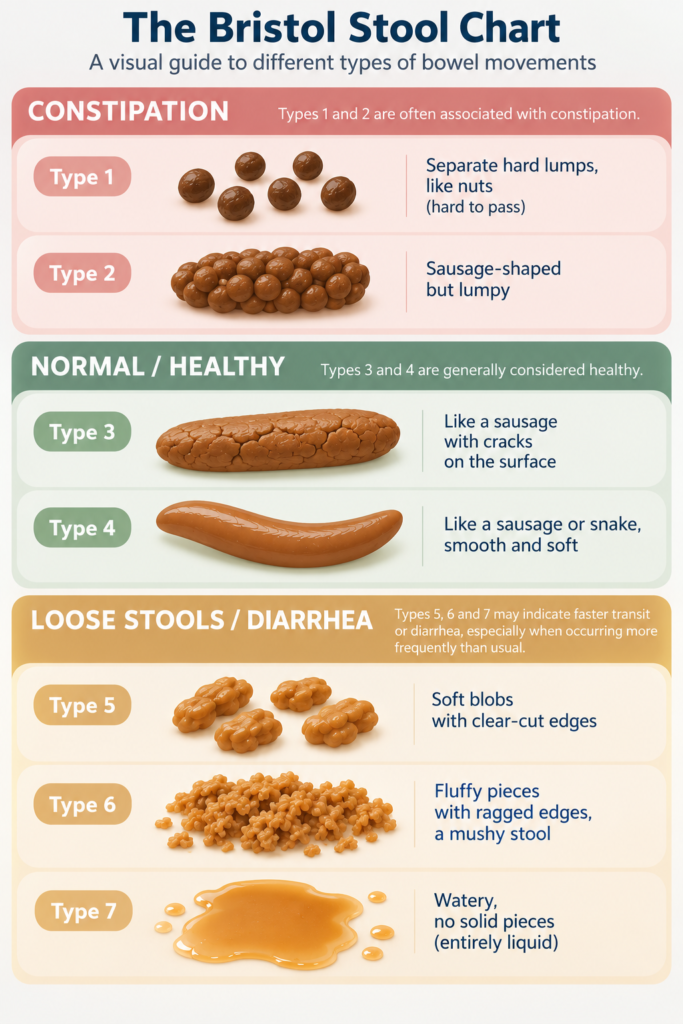
Your stool can tell you a lot about your digestive health.
The Bristol Stool Chart identifies seven types of stool, from hard, separate lumps to entirely liquid stools.
Types 1–2: Constipation
Hard, lumpy stools that may be difficult or painful to pass.
Types 3–4: Healthy, Formed Stools
Soft, formed stools that are generally easy to pass. Type 4 is smooth and sausage-shaped.
Type 5: Soft Stools
Soft pieces with clear edges. These may be normal for some people, particularly when passed without urgency or discomfort.
Types 6–7: Loose Stools or Diarrhea
Mushy or watery stools that may indicate diarrhea, particularly when occurring more frequently than usual.
A healthy bowel movement should feel comfortable and leave you with a sense of complete evacuation.
In Traditional Chinese Medicine, we also consider stool consistency, your natural bowel rhythm, abdominal sensations, and how you feel afterward.
Healthy elimination is not just about how often you go. It is about how comfortably your body functions.
Constipation is not always caused by eating too little fibre or drinking too little water. Stress, aging, medications, lack of movement, and underlying health conditions can also affect bowel movements.
Traditional Chinese Medicine looks beyond the stool itself to understand why your digestive system may not be working comfortably.
In Chinese Medicine, the Stomach and Spleen are responsible for transforming food and supporting nourishment, while the Large Intestine is associated with elimination. The Kidney also plays a supporting role in traditional digestive theory.
Constipation may develop when intestinal movement is disrupted, the body lacks sufficient moisture, or digestive activity is considered too weak.
Chinese Medicine describes these differences through concepts such as Qi (functional activity), Heat (a pattern associated with warmth and dryness), Blood (nourishment), and Yang (warming activity).
This is why two people with constipation may experience very different symptoms and benefit from different approaches.
| Type of Constipation | Common Symptoms | What May Help |
|---|---|---|
| Heat & Dryness Heat Constipation | Hard, dry stools, thirst, dry mouth, abdominal fullness, and sometimes feeling hot. | Adequate fluids, suitable fibre-rich foods, and individualized TCM care traditionally aimed at clearing Heat and moistening the intestines. |
| Stress & Tension Qi Stagnation: disrupted digestive movement | Constipation during stressful periods, bloating, abdominal tightness, and irregular bowel habits. | Walking, relaxation, regular bathroom routines, and individualized acupuncture to address associated symptoms. |
| Low Energy & Weak Digestion Qi Deficiency: insufficient functional strength | Difficulty passing stool even when it is not particularly hard, straining, weakness, and fatigue after bowel movements. | Regular nourishing meals, gentle physical activity, and individualized TCM care traditionally focused on supporting Qi. |
| Dryness & Lack of Nourishment Blood Deficiency: insufficient nourishment | Dry stools, pale complexion, dizziness, and sometimes fatigue or weakness. | Adequate nutrition and hydration, with individualized Chinese Medicine care traditionally aimed at nourishing Blood and moistening the intestines. |
| Cold & Sluggish Digestion Cold Constipation: sometimes associated with Yang Deficiency | Often feeling cold, cold abdomen, cold hands or feet, fatigue, and difficulty passing stool. | Warm cooked meals when tolerated, gentle movement, and individualized TCM treatment traditionally focused on warming and supporting digestive activity. |
| Damp-Heat & Digestive Heaviness Damp-Heat: a traditional pattern of heaviness and Heat | Bloating, abdominal heaviness, sticky stools, and a sensation of incomplete evacuation. Bowel habits may be irregular. | Regular meals, identifying foods that aggravate symptoms, gentle movement, and individualized TCM care traditionally aimed at addressing Damp-Heat. |
Not All Constipation Is the Same
Some people struggle with dry stools. Others experience constipation when stressed, exhausted, or frequently cold. Understanding these differences helps guide individualized care.
At Victoria Healing Space in Victoria, BC, acupuncture, Chinese herbal medicine when appropriate, and dietary guidance may be considered as part of your digestive health care.
These are traditional Chinese Medicine patterns, not modern medical diagnoses. Damp-Heat does not necessarily indicate a bacterial infection. Persistent or worsening constipation should be medically assessed.

Acupuncture may help support intestinal motility and communication between the digestive system and nervous system. Research suggests that acupuncture, particularly electroacupuncture, may improve bowel movement frequency and constipation-related symptoms in some patients.
As a Registered Traditional Chinese Medicine Practitioner (R.TCM.P.) and Registered Acupuncturist (R.Ac.), I understand that constipation has different underlying patterns and that the same treatment does not work for everyone.
At Victoria Healing Space, I usually begin with a gentle acupuncture approach, allowing me to observe how your body responds. However, treatment intensity, techniques, and frequency always depend on your individual condition, symptoms, and clinical assessment.
My goal is to provide thoughtful, personalized care rather than following a standard protocol.
In Traditional Chinese Medicine, relieving constipation is not the same as addressing why it happens. Laxative herbs may help stimulate bowel movements, but our primary goal is to understand why your body is struggling to eliminate waste naturally.
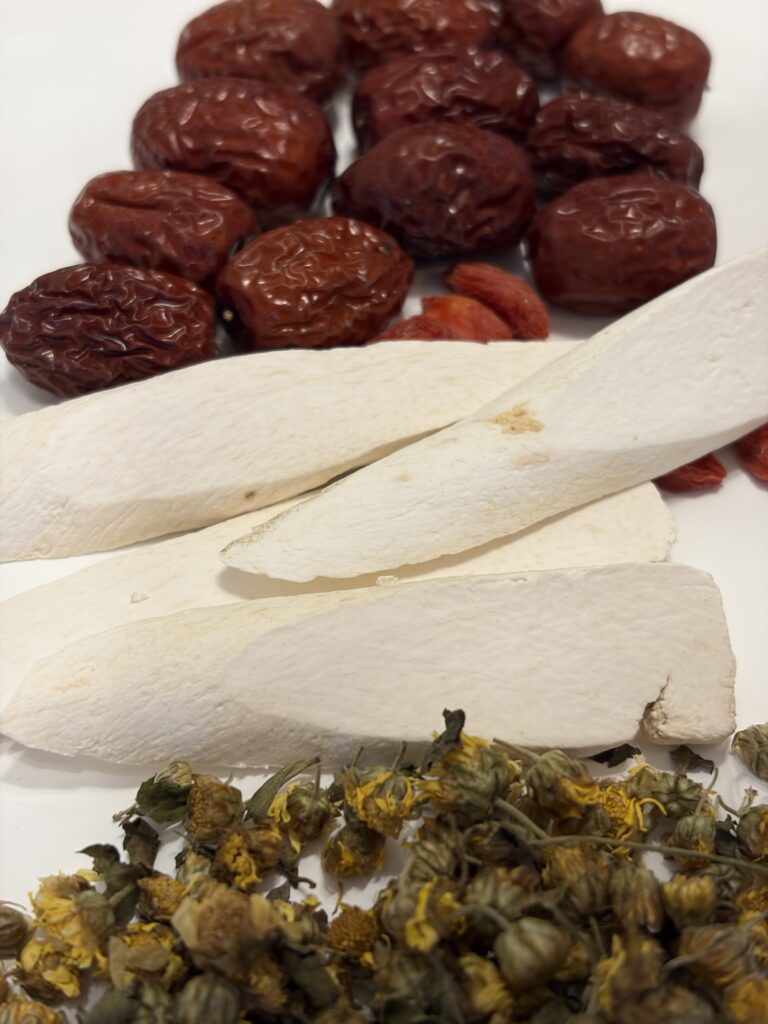
Chinese Herbal Medicine uses different categories of herbs depending on the underlying pattern. For example, Da Huang (rhubarb root) is a strong purgative herb traditionally used for certain types of constipation, while Huo Ma Ren (hemp seed) helps moisten the intestines and promote bowel movements.
Other herbs work differently. Huang Qi (Astragalus) and Dang Shen (Codonopsis) are traditionally used to tonify Qi when constipation is associated with fatigue and weakness. Dang Gui (Angelica sinensis) nourishes Blood and may be included in formulas when intestinal dryness is associated with Blood Deficiency. When stress affects digestion, herbs such as Chai Hu (Bupleurum) may be used in formulas to regulate Qi movement.
Strong laxative herbs are used selectively, not as a routine solution. Herbal formulas are chosen according to your overall presentation, and some herbs may cause side effects or interact with medications.
Please consult a qualified Traditional Chinese Medicine practitioner before taking Chinese herbs for constipation. The appropriate formula, dosage, and duration depend on your symptoms, medical history, and current medications.
If constipation has become a recurring concern, you may wish to explore a different approach to your digestive health.
At Victoria Healing Space, I take time to understand your symptoms, bowel habits, and overall health before developing an individualized acupuncture treatment plan.
Whether you are experiencing occasional constipation, chronic digestive discomfort, or changes in bowel habits, you are welcome to book a consultation to discuss whether acupuncture may be appropriate for you.
Research suggests that acupuncture, particularly electroacupuncture, may improve bowel movement frequency and constipation-related symptoms in some people. Results vary depending on the underlying cause. Acupuncture may be considered as complementary care alongside appropriate medical treatment.
Yes, acupuncture may be considered for older adults following an individual assessment. Constipation becomes more common with age due to factors such as medications, reduced physical activity, and changes in bowel function. I generally begin with a gentle approach, considering your overall health, medications, and comfort.
Results and treatment times can wary.
Acupuncture may be considered for children in selected circumstances, depending on their age, comfort, medical history, and the practitioner’s training. Treatment requires appropriate parental or guardian consent and the child’s involvement in decisions according to their capacity. Persistent constipation in children should first be assessed by a healthcare professional.
Acupuncture may sometimes be considered during recovery, but the type of surgery, medications, and healing process must be reviewed first. Constipation after surgery can be related to anesthesia, opioid pain medications, reduced mobility, or other complications. New or severe constipation after surgery requires medical assessment before acupuncture is considered.
There is no fixed number of sessions. Treatment planning depends on how long constipation has been present, your symptoms, medical history, and response to acupuncture. After the initial assessment, we can discuss an appropriate treatment plan and review your progress.
When appropriate, Chinese herbal medicine or external herbal applications may be recommended as part of your individualized treatment plan.
Visit our Your First Visit page to learn more about your first appointment.
In many cases, yes. If your extended health plan includes coverage for acupuncture provided by a Registered Acupuncturist or Registered Traditional Chinese Medicine Practitioner, your Acupuncture treatment for constipation may be eligible for reimbursement. Coverage varies by insurance provider and individual plan. Victoria Healing Space offers direct billing to many major insurance companies whenever available. Learn about extended health benefits here.
If your constipation or activity-related limitations are connected to a motor vehicle accident, you may be eligible for ICBC-funded acupuncture treatment. ICBC commonly covers acupuncture for approved claims, helping support recovery, reduce pain, and improve function after an accident. If you’re unsure about your eligibility, I’d be happy to discuss your situation during your appointment. Contact me here, please.