
Electroacupuncture in Victoria BC
What Is Electroacupuncture?
Electroacupuncture Victoria BC combines traditional acupuncture with gentle, controlled electrical stimulation. It is sometimes called acupuncture with electrical stimulation or acupuncture E-stim.
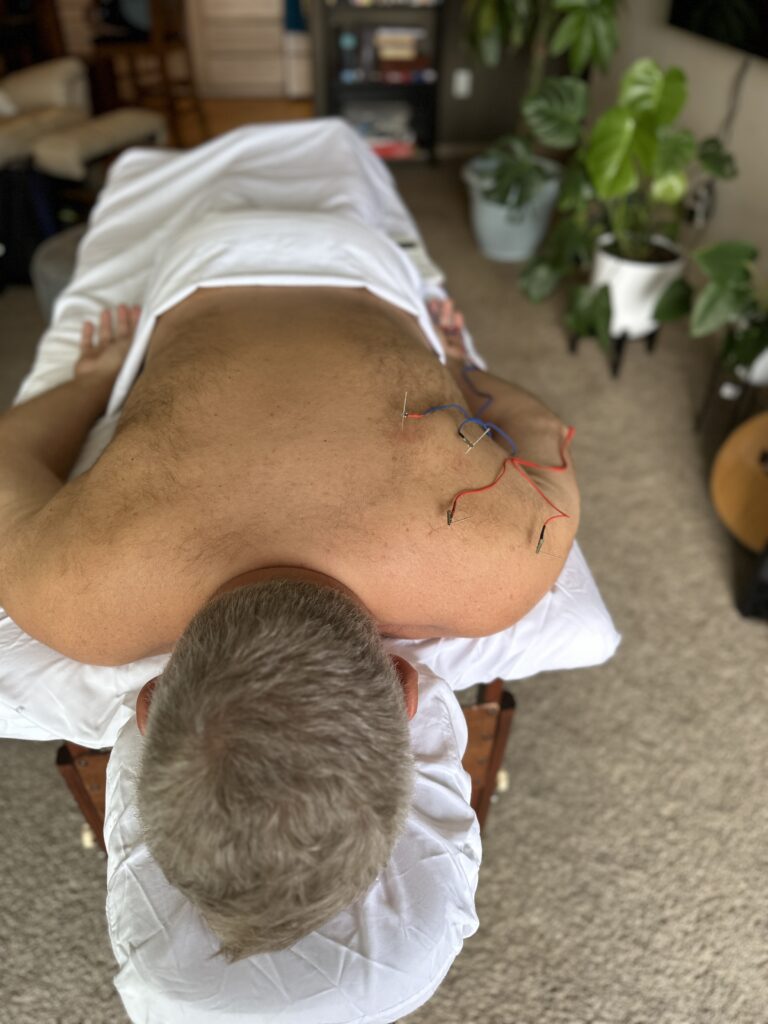
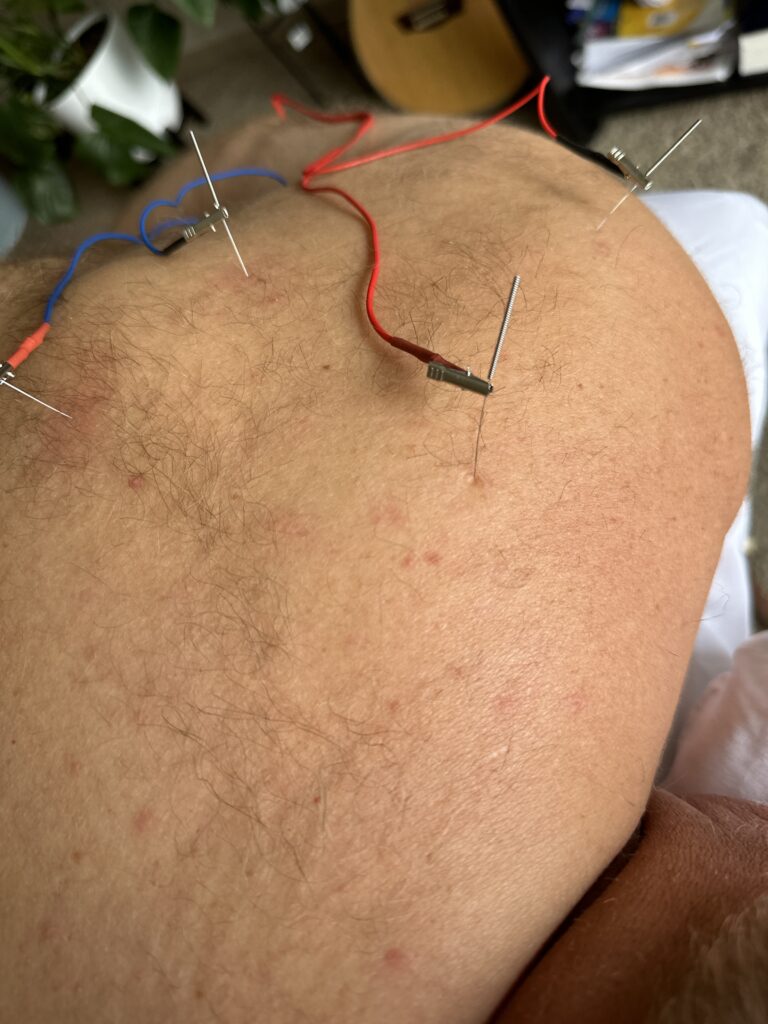
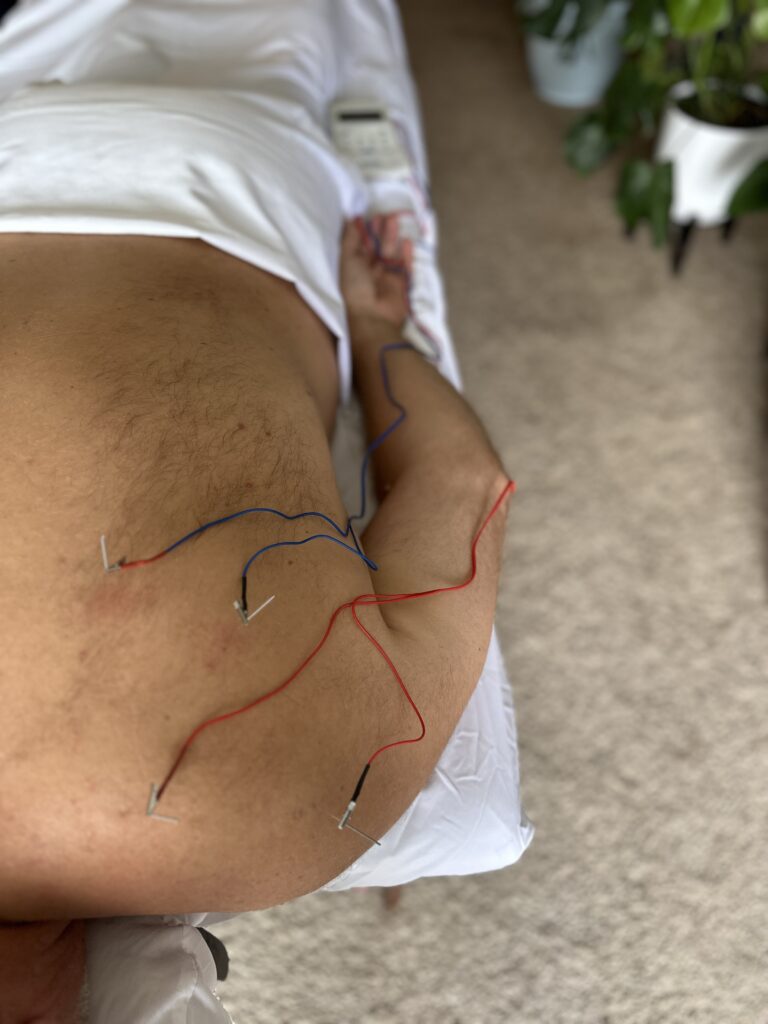
Fine, sterile, single-use acupuncture needles are inserted into carefully selected points. Once the needles are comfortably in place, small clips connect some of them to an electroacupuncture device.
The device sends a mild, regulated current between the connected needles. Your practitioner adjusts the placement, frequency, intensity and treatment time according to your symptoms, health history and sensitivity. Other needles may be stimulated manually during the same treatment.
At Victoria Healing Space, electroacupuncture is never an automatic addition. We assess your symptoms, health history, medications before deciding whether manual acupuncture or electroacupuncture is more suitable. It is used only after an assessment, an explanation of the treatment and your consent.
How Does Electroacupuncture Work?
Electroacupuncture sends gentle, repeated signals through selected acupuncture needles. These signals travel through sensory nerves to the spinal cord and brain, where pain information is processed.
Research suggests that this stimulation may:
- Influence how strongly pain signals are transmitted
- Activate the brain’s own pain-regulating pathways
- Affect natural chemical messengers involved in pain control
- Stimulate motor nerves and create gentle muscle contractions
- Affect local circulation and tissue responses
Different frequencies create different patterns of stimulation. Lower frequencies usually feel like slower pulses and may produce rhythmic muscle movement. Higher frequencies feel faster and more continuous. Alternating frequencies may help prevent the nervous system from becoming accustomed to one repeated signal.
There is no single frequency that is best for every condition. The settings are selected according to your symptoms, treatment goals, sensitivity and response.
Electroacupuncture does not simply switch pain off or repair every injured nerve. It may help influence how the nervous system processes pain as one part of an individualized treatment plan.
Who May Benefit from Electroacupuncture?
Electroacupuncture may be considered for people experiencing:
- Chronic low-back pain
- Sciatica or pain travelling into the leg
- Neck and shoulder pain
- Muscle spasms or persistent muscle tension
- Sports or repetitive-use injuries
- Osteoarthritis-related pain
- Certain types of chronic pain
- Numbness, tingling or other symptoms associated with peripheral neuropathy
- Muscle weakness within an appropriate rehabilitation plan
- Selected symptoms during post-stroke rehabilitation
Electroacupuncture may be selected when steady, repeated stimulation of particular acupuncture points, nerves or muscles is appropriate. Depending on your presentation, it may be used alone or alongside manual acupuncture, cupping therapy or another treatment method.
What Does Electroacupuncture Feel Like?
You may feel gentle tapping, pulsing, tingling or a mild rhythmic muscle response.
The stimulation begins at zero and is increased gradually with your feedback. It should feel noticeable but comfortable—not sharp, painful or overwhelming.
The intensity can be reduced or stopped immediately at any time
Is Electroacupuncture the Same as Electrical Stimulation or TENS?
No. “Electrical stimulation” is a general term that covers several different therapies — electroacupuncture is one specific type of it. Electroacupuncture is not the same as TENS (transcutaneous electrical nerve stimulation). The table below breaks down the difference.
| Electroacupuncture | TENS | |
|---|---|---|
| How current is delivered | Through fine needles inserted into acupuncture points, at the level of tissue beneath the skin | Through sticky pad electrodes placed on the surface of the skin |
| Who provides it | A licensed acupuncturist, as part of an acupuncture treatment | Can be self-administered with a home unit or used by various practitioners |
| Point/placement selection | Specific acupuncture points chosen based on your TCM pattern and condition | General placement over or around the painful area |
| TCM perspective | Intended to support the movement of Qi and Blood along with the needling itself | Not a TCM modality |
| Availability | Only during an in-clinic acupuncture session | Often available for home use between appointments |
Some patients use both — electroacupuncture during in-clinic sessions and a TENS unit at home in between. Whether that combination is appropriate depends on your condition and is something to discuss with your practitioner.
Electroacupuncture or Regular Acupuncture: Which Is Better?
Neither method is automatically better.
With regular acupuncture, needles may be stimulated manually and then left in place. Electroacupuncture provides repeated stimulation through selected needles for part of the treatment.
The choice depends on:
- Your symptoms and diagnosis
- The treatment area
- Your sensitivity
- Your medical history
- The desired treatment response
- How you responded to previous treatments
- Your comfort and preference
Some patients receive only manual acupuncture. Others may receive a combination of manual acupuncture and electroacupuncture during the same appointment.
Who Provides Electroacupuncture?
At Victoria Healing Space, electroacupuncture is provided by licensed acupuncture and Traditional Chinese Medicine practitioners regulated by the College of Complementary Health Professionals of British Columbia.
In BC, electroacupuncture is provided within the professional scope of acupuncture. Your practitioner assesses whether electrical stimulation is appropriate, explains the procedure, obtains your consent and follows professional safety and infection-control standards.
FAQ
Is Electroacupuncture Safe?
Electroacupuncture is generally well tolerated when it is appropriately selected and provided by a trained practitioner. However, electrical stimulation is not suitable for every person or every treatment area.
Electroacupuncture is generally avoided in patients with:
- A pacemaker
- An implanted defibrillator
- Another implanted electronic medical device
It is not applied across the chest or through the area of the heart.
Additional assessment or modification may be required for:
- Pregnancy
- A seizure disorder or history of seizures
- Significant heart conditions
- Frailty or medical instability
- Areas with reduced or absent sensation
- Areas affected by impaired circulation
- Recent surgery or acute injury
- Patients unable to communicate discomfort reliably
Tell your practitioner about pregnancy, seizures, heart conditions, surgeries and all implanted devices before treatment.
Does Electroacupuncture Have Side Effects?
Yes. Temporary effects may include:
- Mild soreness
- Small marks or bruises at needle sites
- Temporary tingling
- Muscle fatigue
- Light-headedness
Your practitioner checks the equipment, begins at zero intensity and monitors your comfort throughout the treatment.
What is Electroacupuncture Aftercare?
After treatment:
- Rise slowly from the treatment table.
- Drink normally according to your thirst.
- Allow tired or tender muscles to recover before strenuous exercise.
- Notice any changes in pain, sensation and movement.
- Contact the clinic if you experience persistent or increasing pain, unexpected weakness, prolonged numbness or another concerning reaction.
Most patients can return to their normal daily activities after treatment.
How Many Electroacupuncture Treatments Will I Need?
There is no standard number of treatments for everyone.
The recommended frequency depends on the condition, how long it has been present, its severity, your overall health and how you respond. Your progress is reassessed rather than assuming that electroacupuncture should continue indefinitely.
Learn more about what to expect at your first acupuncture visit.
Can Electroacupuncture Be Combined With Other Treatments?
When appropriate, electroacupuncture may be combined with manual acupuncture or another Chinese medicine treatment method.
Depending on your presentation, your treatment plan may also include:
These methods are selected individually. Receiving acupuncture does not mean that every additional technique will be used.