You stretch. You rest. You ice it, then heat it. Maybe the X-ray comes back “unremarkable” — no explanation, just the same ache in the same spot.
Or maybe it’s the opposite: the imaging was crystal clear. A herniated disc, a diagnosis with a name. Maybe you even went through surgery. And the pain is still there.
Both of these are more common than people think. Up to 80% of people deal with low back pain at some point. Whether the scan explained nothing or explained everything, the same question is left sitting there unanswered: why does this back keep giving out, and what would it actually take to change that?
Olya Dzidzverg, R.Ac., R.TCM.P. is a Registered Acupuncturist and Traditional Chinese Medicine Practitioner with additional training in advanced orthopedic acupuncture and distal acupuncture techniques for pain and musculoskeletal conditions. At Victoria Healing Space, treatment begins with an individual assessment of your pain — where you feel it, how it behaves, what aggravates it, and how it affects your movement and daily life.
CCHPBC #102199 · Direct Billing · ICBC Approved
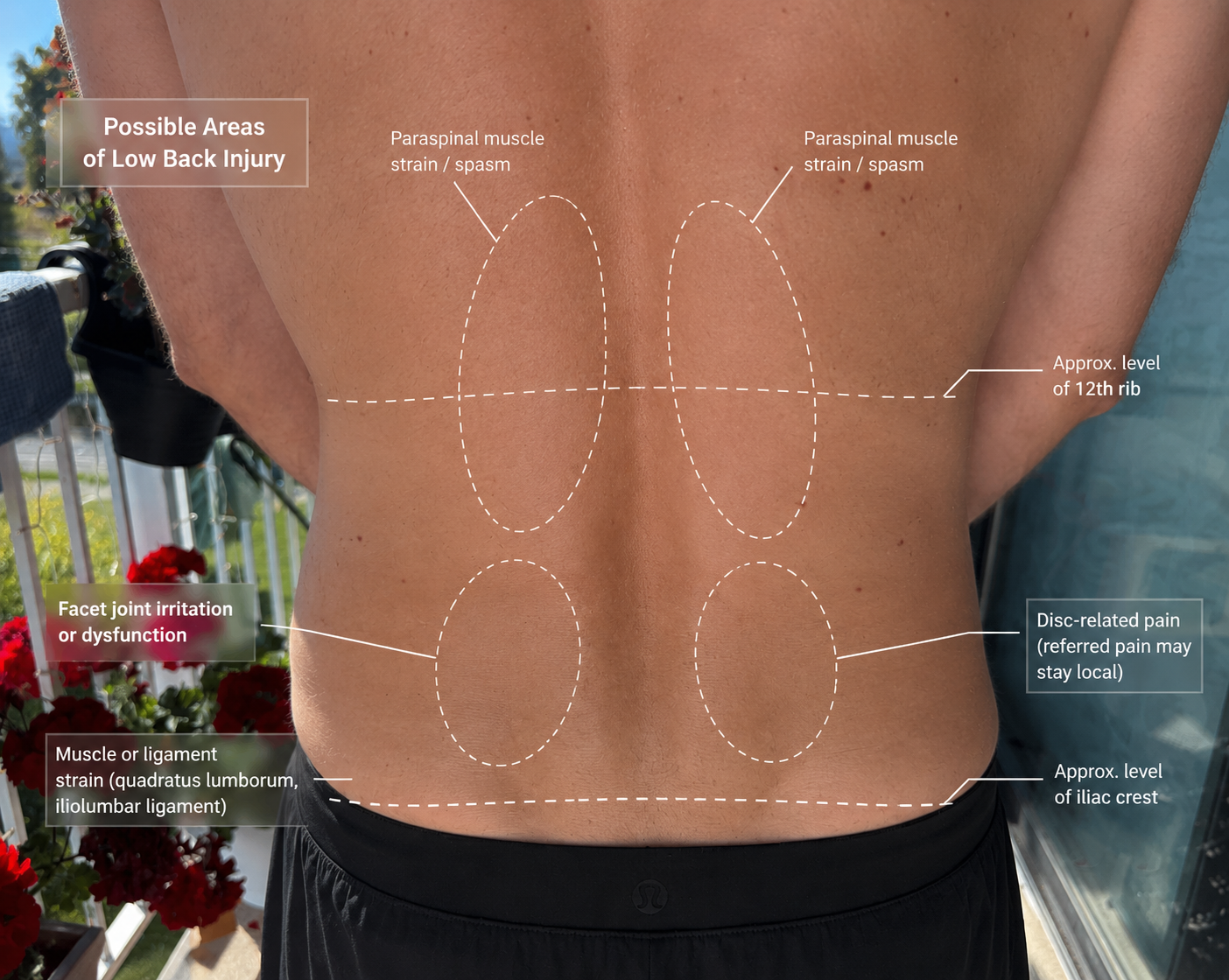
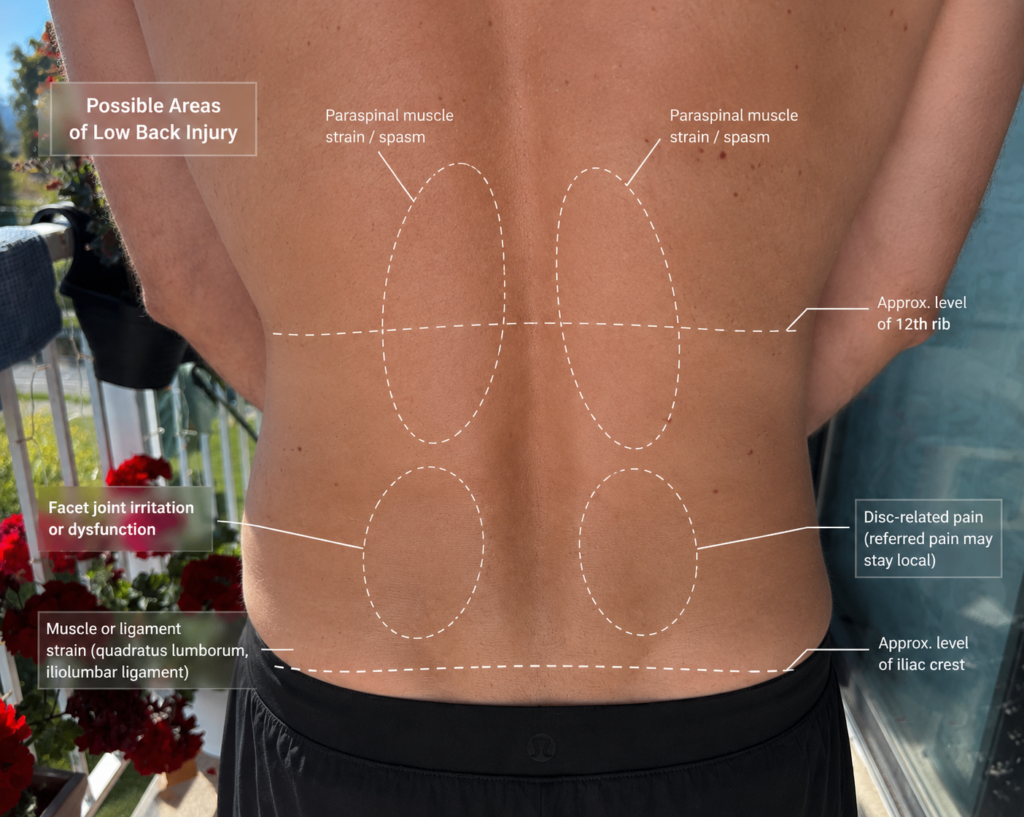
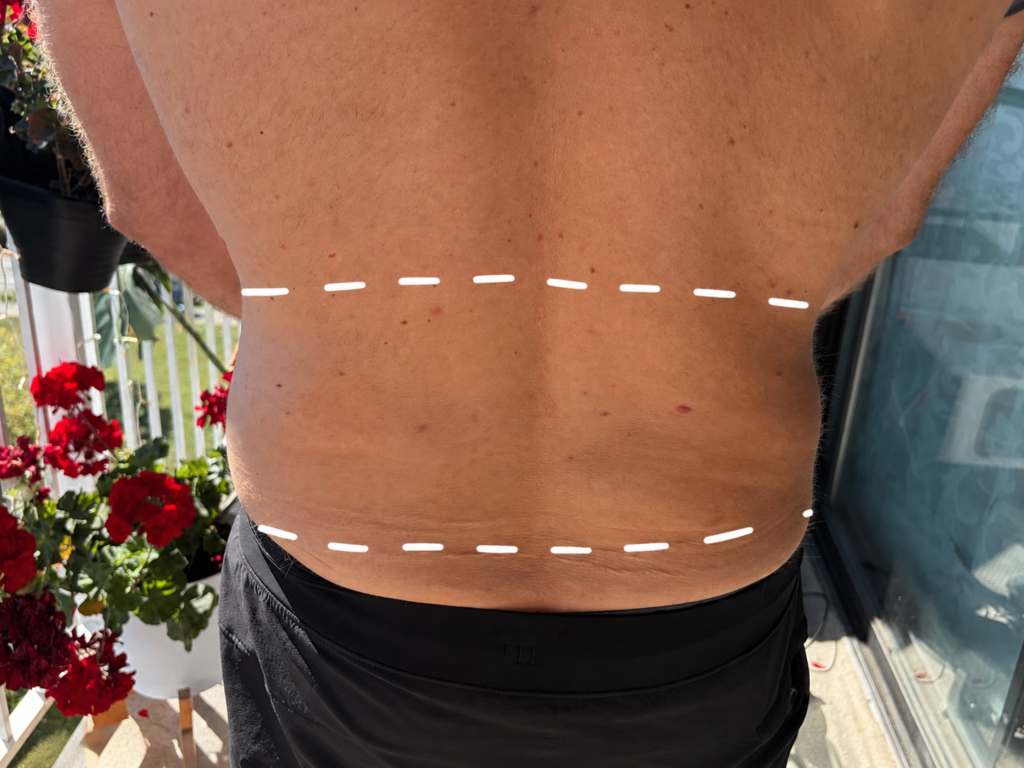
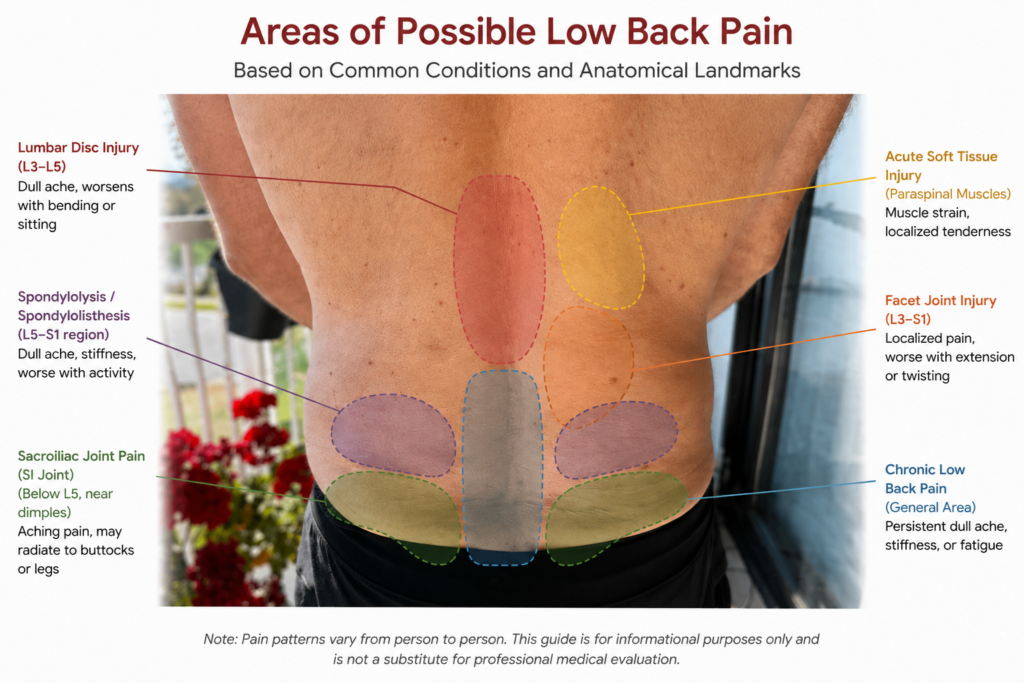
Low back pain (LBP) is pain or discomfort experienced on one or both sides of the lower back, in the area between the 12th rib and the iliac crest.
Pain can feel very different from person to person. It may be dull and aching, sharp, burning, tight, or deep, and it may appear only with certain movements or remain present even at rest. Some people can point to one exact painful spot, while others feel pain across a larger area of the lower back.
Where you feel the pain and what makes it better or worse can provide important clues about which structures may be involved.
Muscle and soft-tissue strain
Often follows lifting, exercise, repetitive activity, or an awkward movement. Pain may feel sore, tight, or worse with movement.
Lumbar disc-related pain
Disc irritation may cause pain in the low back and sometimes symptoms that extend into the buttock or leg.
Lumbar facet joint pain
Often causes localized low back pain that becomes worse with certain movements, particularly extension or twisting.
Sacroiliac (SI) joint pain
Often felt very low in the back or around the upper buttock and may be more noticeable on one side.
Sciatica and nerve-related pain
May cause pain that travels from the low back or buttock into the leg, sometimes accompanied by tingling, numbness, or weakness.
Spondylolysis and spondylolisthesis
These conditions involve the vertebrae and may be associated with low back pain that changes with activity or certain spinal movements.
Degenerative changes of the lumbar spine
Age-related changes in the discs and joints are common. They may contribute to pain or stiffness, although imaging findings do not always correspond with the symptoms a person experiences.
In Chinese medicine, where your back hurts is only one part of the picture. How the pain feels, when it appears, and what changes it help determine how treatment is approached.
Sharp or dull? Better with heat or cold? Worse in the morning, at the end of the day, after activity, or at rest? For women, does it change before, during, or after menstruation? Each of these details has meaning within Chinese medicine.
We also look beyond the back. Sleep, diet, digestion, bowel movements, energy, urination, and menstrual patterns can provide information that helps complete the clinical picture. Even something that seems unrelated, such as hemorrhoids, may be relevant.
These observations are interpreted according to principles of pattern differentiation developed through centuries of Chinese medicine practice. The resulting pattern establishes the treatment principle, which then guides the selection of acupuncture points.
That is why acupuncture is not simply needles placed where it hurts. Two people with low back pain may require very different treatments.
You may already have noticed a pattern in your back pain.
Maybe it is worse when it’s cold and rainy, after a stressful week, after sitting or physical activity, or when you are tired and haven’t been eating or sleeping well.
These details may seem unrelated, but they can be clinically useful. Recognizing the pattern helps us understand what aggravates your pain and what may help settle it.
Treatment depends on what we find during your assessment.
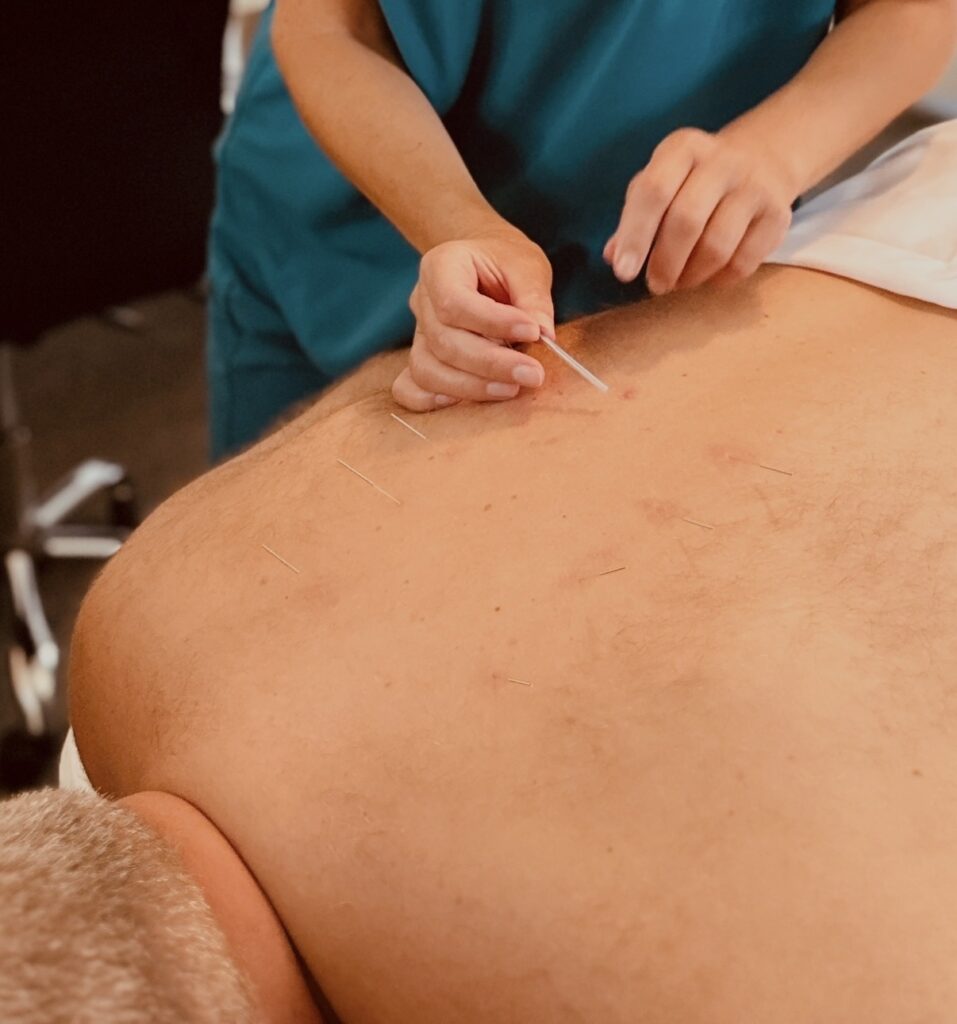
For an acute episode, especially when movement is painful or the back is in spasm, treatment may begin with distal acupuncture points away from the painful area. As the pain settles and movement improves, local points may be added.
For persistent or recurring low back pain, treatment may combine local and distal acupuncture, electroacupuncture, cupping, or other techniques, depending on the presentation.
The point selection and treatment approach can change as your symptoms change.
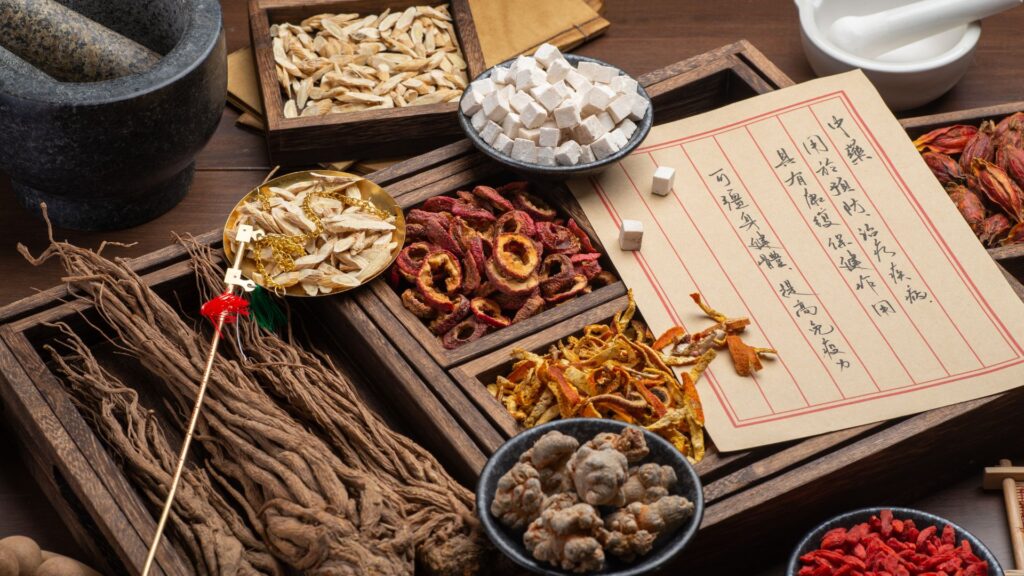
Chinese herbal medicine may be considered for some patients, particularly when low back pain is persistent or recurring and forms part of a broader TCM pattern.
Herbal formulas are prescribed individually and are not automatically part of low back pain treatment.
Your first visit begins with a conversation about your low back pain — when it started, what it feels like, what makes it better or worse, and how it affects your movement and daily life. How to prepare for your first acupuncture visit, parking, meals, and clothes read here.
Your assessment may also include questions about sleep, digestion, energy and other factors that can help us understand the broader pattern behind your symptoms.
Treatment is then selected based on what we find. There is no single acupuncture protocol for everyone with low back pain.
Once the needles are placed, you will usually rest comfortably for about 20–30 minutes. The needles are sterile, single-use and very fine.
If further treatment is recommended, we will discuss the plan and frequency with you.
Direct billing is available for many extended health plans. ICBC acupuncture treatments are also available for eligible motor vehicle accident claims.
Olya Dzidzverg, R.Ac., R.TCM.P., is a Registered Acupuncturist and Traditional Chinese Medicine Practitioner with the College of Complementary Health Professionals of BC (CCHPBC #102199), practising at Victoria Healing Space in Victoria, BC.
This article is for general educational purposes and does not replace individual medical assessment or advice. Seek prompt medical assessment for low back pain accompanied by progressive weakness, loss of bladder or bowel control, fever, or unexplained weight loss.
The number of treatments depends on whether your pain is acute or chronic, as well as its underlying severity. Acute back pain or sudden flare-ups often show noticeable relief within 3 to 6 sessions scheduled close together. Chronic or long-standing low back pain typically requires a course of 6 to 10 treatments to achieve sustained improvement, followed by occasional maintenance sessions as needed. Your individualized treatment plan and timeline will be discussed during your initial assessment.
Yes. In many cases, acupuncture can be used safely alongside conventional care for pain associated with disc-related conditions. While acupuncture does not physically “put a disc back in place,” it focuses on reducing surrounding muscle spasms, relieving local nerve irritation, and improving mobility to help manage your overall symptoms.
While most low back pain is musculoskeletal and responds well to conservative care, you should seek immediate emergency medical evaluation if your back pain is accompanied by red-flag symptoms: sudden loss of bowel or bladder control, numbness in the saddle/groin area, progressive leg weakness, unexplained fever, or recent severe trauma. For routine low back pain without emergency symptoms, an assessment by a primary care physician or regulated health professional is recommended.