
Ear Acupuncture in Victoria BC

When to Choose Ear Acupuncture

Ear acupuncture Victoria, BC may be considered when you are dealing with poor sleep, fatigue, pain, stress, nervous tension, digestive discomfort, hormonal symptoms or simply do not feel like yourself.

At Victoria Healing Space, we first discuss what you are experiencing, how long it has been happening and how it affects your daily life. We then decide whether ear acupuncture is appropriate for you.

What Is Ear Acupuncture?

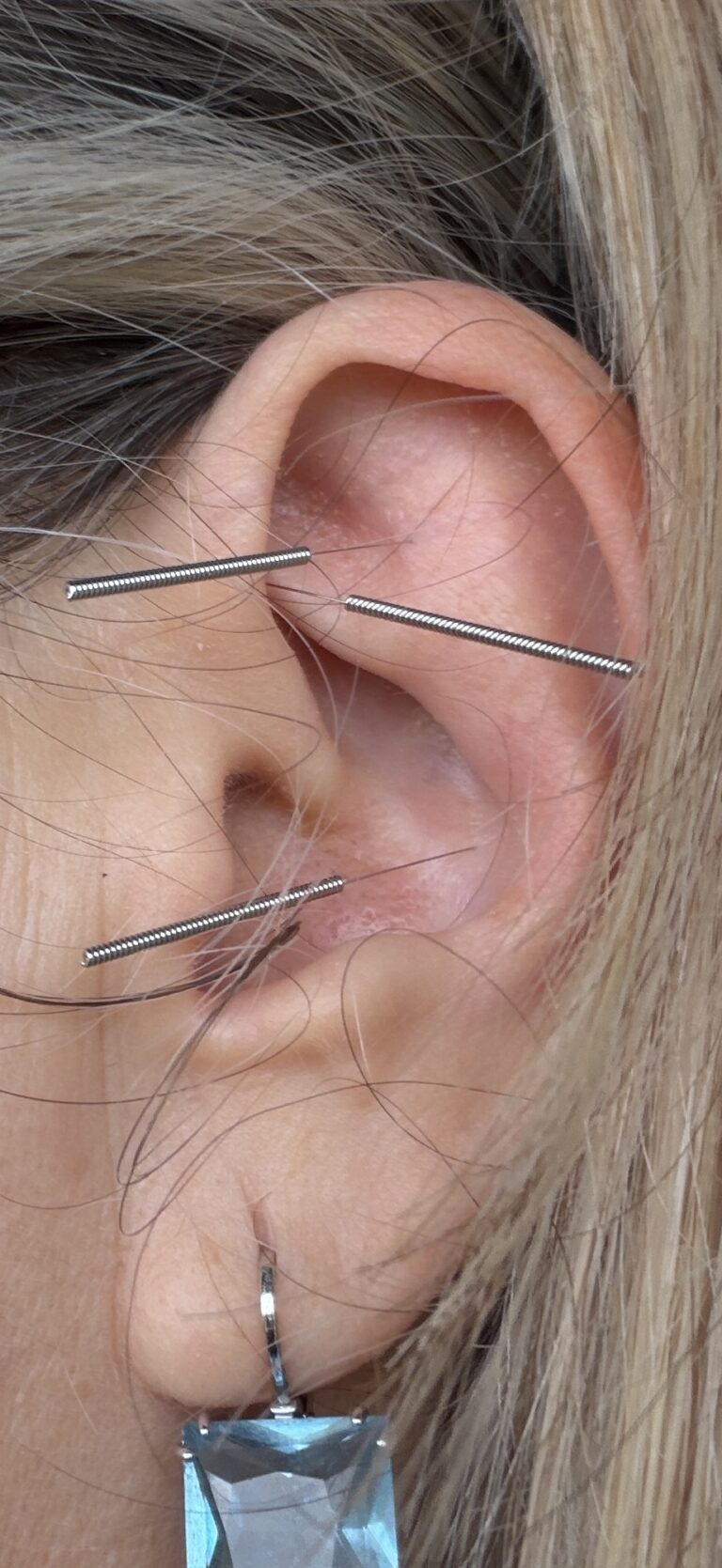
Ear acupuncture, also called auricular acupuncture, uses very fine, sterile needles placed in selected areas of the outer ear.

The needles do not enter the ear canal. They are placed only in the visible part of the ear and are removed before you leave the clinic.

The ear may also be stimulated without needles. Small seeds or beads can be attached with adhesive and pressed gently between appointments. This is called ear acupressure or ear seeding.

Ear Acupuncture Victoria NADA protocol

Why Use the Ear?

The outer ear has a rich sensory nerve supply, including branches of the vagus, trigeminal and cervical nerves. When the ear is stimulated, sensory signals travel into the nervous system. Researchers are studying how this input may influence pain processing, stress responses and autonomic regulation.

Traditional Chinese Medicine views the ear as a microsystem—a small area that reflects different regions and functions of the body. References to treating through the ear appear in early Chinese medical literature. Modern auricular mapping was later developed by French physician Paul Nogier in the 1950s.

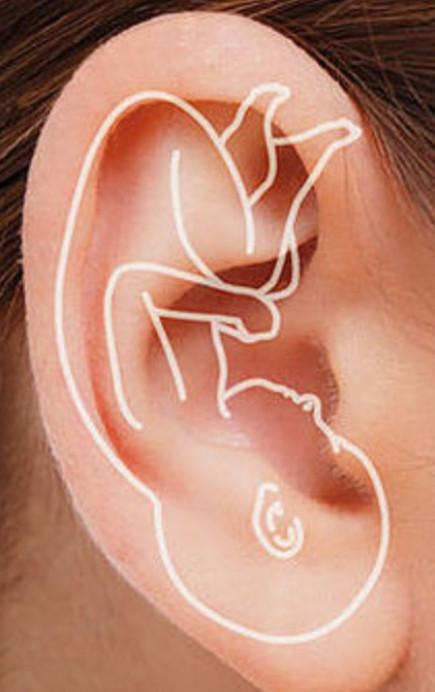
Nogier described the body as being represented on the ear in the position of an inverted fetus:

  • The earlobe corresponds to the head and face.
  • The outer ridge is associated with the spine and limbs.
  • The inner regions are associated with the chest, abdomen and internal functions.

A tender area on the ear may help guide treatment, but it cannot prove that a particular organ is unhealthy.

Ear Acupuncture Victoria Fetal analogy

What Does Ear Acupuncture Feel Like?

You may feel a brief pinch when a needle is inserted. Once the needles are in place, you may notice:

  • Mild pressure
  • Tingling
  • Warmth
  • Heaviness
  • A dull ache
  • Little or no sensation

A needle can be adjusted or removed immediately.

Some patients become calm or sleepy during treatment. Others remain alert or notice no immediate change. Both responses are normal.

When May Ear Acupuncture Be Used?

Ear acupuncture in Victoria, BC may be considered as part of care for the concerns below. Treatment is selected based on your symptoms, health history and response to care.

Stress & Anxiety
Emotional Changes
  • Mood swings, irritability
  • Crying more easily
  • Feeling disconnected or unsettled
Sleep
  • Trouble falling/staying asleep
  • Waking early, unrestored sleep
  • Sleep changes in perimenopause/menopause
Fatigue
  • Chronic fatigue
  • Low energy, heaviness
  • Poor concentration, difficulty recovering
Pain
Digestion
Hormonal Changes
  • Premenstrual/menstrual discomfort
  • Perimenopause, menopause
  • Hot flashes, night sweats
  • Chinese herbal medicine for persistent symptoms

How May Ear Acupuncture Work?

The outer ear is a complex sensory structure connected to several nerve pathways. Stimulation of the ear may influence how the nervous system receives, processes and responds to sensory information.
Anatomy of the external ear
External ear anatomy · Gray’s Anatomy (1918), public domain

The ear receives sensory input from several nerves

1
Auriculotemporal nerve Branch of the trigeminal nerve (CN V)
2
Auricular branch of the vagus nerve Branch of cranial nerve X
3
Great auricular nerve Cervical plexus, primarily C2–C3
4
Lesser occipital nerve Cervical sensory nerve, primarily C2
These nerve territories overlap. Stimulation of one area of the ear may therefore activate more than one sensory pathway.
↓
Sensory stimulation of the outer ear
Acupuncture needles, ear seeds or pressure provide sensory input through peripheral nerve pathways.
↓
Central nervous system Sensory information is processed within interconnected neural networks
may influence
↓
⚡
Pain regulation How pain-related sensory signals are processed and regulated
◉
Stress & alertness Neural networks involved in arousal, attention and responses to sensory information
♡
Autonomic regulation Pathways involved in heart rate, breathing, digestion and recovery
What does the research suggest?
Current evidence suggests that auricular stimulation may affect sensory processing, pain modulation, autonomic activity and neurochemical responses. There is no single mechanism that explains every reported effect, and an ear point should not be interpreted as a direct diagnostic marker for a particular organ.
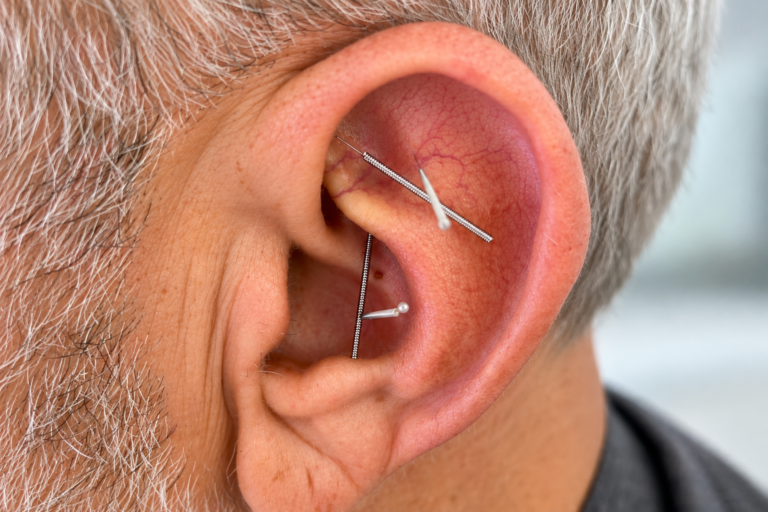
Ear acupuncture treatment with fine needles at Victoria Healing Space in Victoria, BC

Ear Acupuncture Victoria and the NADA protocol

The NADA protocol was originally developed as supportive care for people experiencing substance withdrawal and addiction. NADA stands for the National Acupuncture Detoxification Association.

The protocol uses the same five acupuncture points in each ear: Sympathetic, Shen Men, Kidney, Liver, and Lung.

Today, the NADA protocol is also used in some mental health, trauma-support, addiction recovery, and community settings. Treatment is usually provided in a quiet environment and does not require a person to talk about or relive difficult experiences. For some people, this can provide a calm, structured setting alongside counselling, medical care, or addiction treatment.

NADA is supportive care and does not replace psychotherapy, medication, medical care, or specialized addiction treatment.

Ear Acupuncture in Victoria Healing Space

Ear acupuncture at Victoria Healing Space is provided by Olya Dzidzverg, Registered Acupuncturist and Registered Traditional Chinese Medicine Practitioner in Victoria, BC.

Before treatment, we discuss what is affecting you, review your health history and medications, and examine the skin of your ears. Points and the amount of stimulation are selected for you—not simply taken from a standard chart.

We do not diagnose medical conditions from the ear alone. We look for practical changes in how you feel and function, such as improved sleep, less pain, greater calm or easier recovery from stress.

If this will be your first appointment, learn how to prepare for your first acupuncture treatment in Victoria, including what to wear, when to eat and what to expect during your visit.

FAQ

What is the difference between ear acupuncture and ear seeds?

Ear acupuncture uses fine, sterile needles to provide more precise stimulation during the appointment. It may be included in treatment for chronic pain, back pain, headaches, stress, anxiety, poor sleep, nausea or other symptoms identified during your assessment. The needles are removed before you leave.

Ear seeds provide gentle, ongoing pressure between appointments. They may be used when symptoms continue throughout the day—for example, recurring pain, nervous tension, anxiety, difficulty settling at night or intermittent nausea. Your practitioner will show you which seeds to press and when.

Ear seeds may also be chosen when a non-needle option is more appropriate. Both methods may use similar points, but the choice depends on your symptoms, skin sensitivity and treatment goals.

How should I care for my ears after treatment?

Most people can return to their usual activities after treatment. Keep your ears clean and avoid rubbing or scratching the treated areas. Mild tenderness can occur temporarily.

If ear seeds were applied:

  • Wash your hands before touching them.
  • Press them gently only as instructed.
  • Do not use strong or continuous pressure.
  • Do not leave them in place longer than recommended.
  • Remove them if they cause pain, itching, redness, swelling or skin irritation.

Contact the clinic if you develop increasing pain, warmth, persistent redness, swelling or discharge.

When should ear acupuncture be avoided or modified?

Ear acupuncture should not be performed through an active ear infection, broken skin, open wounds or significantly inflamed skin. Treatment may also need to be postponed after a recent ear injury or surgery until the area has healed.

Tell your practitioner before treatment if you:

  • Have a bleeding disorder or bruise easily
  • Take anticoagulant or antiplatelet medication
  • Have a weakened immune system or increased risk of infection
  • Have previously fainted during injections or needling
  • Have a known metal, latex or adhesive allergy
  • Are pregnant or may be pregnant
  • Have had recent ear surgery, injury or significant skin problems

These conditions do not always prevent treatment. Your practitioner will assess whether ear acupuncture can be provided safely, whether fewer points or gentler stimulation should be used, or whether treatment should be postponed.

Ear seeds should not be applied to infected, broken or irritated skin. They may also be unsuitable if you react to the seed, metal pellet or adhesive. If electrical stimulation is being considered, disclose any pacemaker or implanted electronic medical device.

Is ear acupuncture covered by insurance?

Usually, yes. If your extended health plan includes acupuncture, ear acupuncture provided by a Registered Acupuncturist or Registered Traditional Chinese Medicine Practitioner is generally eligible for coverage.

Victoria Healing Space offers direct billing to many insurance providers. Coverage amounts, annual limits and referral requirements depend on your individual plan. If direct billing is unavailable, we will provide a detailed receipt that you can submit to your insurer.

Can I wear earrings or hearing aids during treatment?

Earrings may remain in place unless their location interferes with cleaning the ear or accessing a selected treatment point. Earbuds and hearing aids will need to be removed temporarily during treatment.

Can ear acupuncture be combined with other treatments?

Yes. Ear acupuncture may be provided on its own or included as part of a broader treatment. Depending on your symptoms and goals, it may be combined with body acupuncture for pain, acupuncture for stress and anxiety, cupping therapy, moxibustion, gua sha or a TDP heat lamp.

In some cases, Chinese herbal medicine may also be considered to provide support between appointments.

Not every method is needed during every treatment. We select the combination according to your symptoms, health history, sensitivity and response to care.